 Pin It
 I discovered chaos cooking birria ramen by accident when I was standing in my kitchen at midnight, staring at leftover birria beef and a craving for noodles that felt anything but ordinary. My neighbor had raved about her ramen obsession, and I had a sudden vision: what if I combined two completely different food worlds? The Mexican spiced richness meeting Japanese noodle perfection felt wrong in the best way. One late-night experiment later, I was a believer—and my friends became instant converts.
The first time I made this for a dinner party, I was nervous the fusion concept would confuse people, but when that first spoonful hit the table, the room went completely quiet—the good kind of quiet. Someone asked for the recipe before they'd even finished their bowl, and I knew I'd created something special. Now it's become my go-to when I want to impress without spending all day in the kitchen.
Ingredients
- Beef chuck roast (2 lbs): This cut is perfect because the fat and connective tissue break down into pure tenderness over hours of simmering—buy it in one piece if you can, then cut it yourself.
- Dried guajillo and ancho chilies: These are the backbone of your flavor; they're smoky and not too spicy, which balances perfectly with the sesame oil later.
- Chipotle chili in adobo: Just one adds that mysterious depth and a gentle heat that sneaks up on you in the best way.
- Apple cider vinegar: It brightens everything and keeps the broth from tasting one-dimensional.
- Spice blend (cumin, cinnamon, cloves, oregano): This is where the Mexican soul lives—don't skip the cinnamon and cloves, they're what make people wonder what that incredible flavor is.
- Ramen noodles: Fresh is ideal, but instant works fine; just ditch the seasoning packets because your broth is doing all the talking.
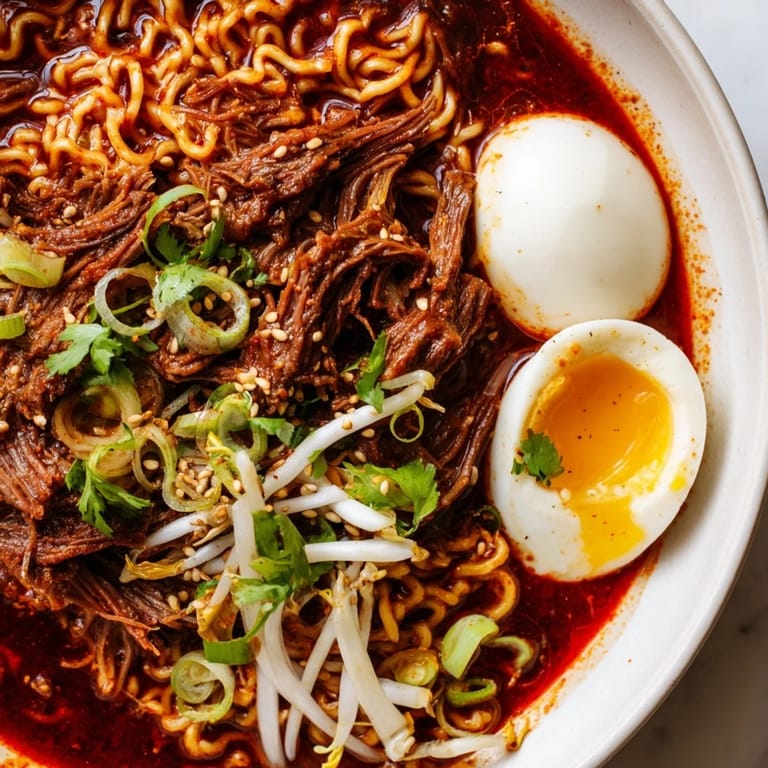
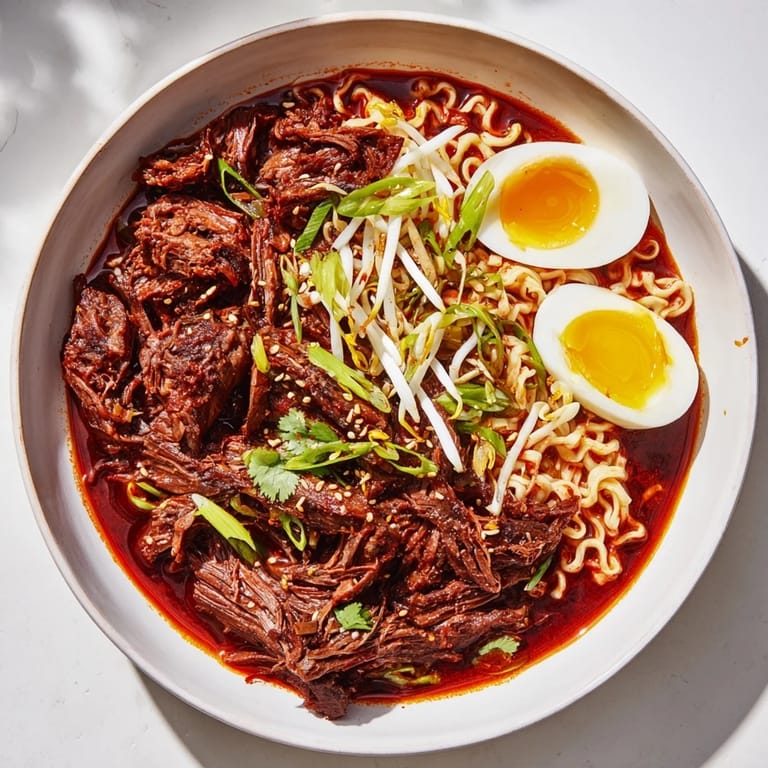
- Fresh toppings (eggs, scallions, cilantro, bean sprouts): These aren't just garnish—they're the textural and flavor contrast that makes each spoonful feel new.
Tired of Takeout? 🥡
Get 10 meals you can make faster than delivery arrives. Seriously.
One email. No spam. Unsubscribe anytime.
Instructions
- Toast and soak your chilies:
- Heat those dried chilies in a dry skillet until they smell incredible and become pliable, then soak them in hot water while you gather the rest of your ingredients. This takes just 10 minutes but unlocks all their flavor.
- Blend your braise base:
- Throw the softened chilies with the chipotle, onion, garlic, tomatoes, vinegar, and spices into a blender and go until it's completely smooth—this becomes your magic potion. Don't skip the blending; texture matters here.
- Sear your beef:
- Brown those chunks on all sides in a hot pot with a splash of oil, working in batches so you're not crowding the pan. This step takes patience, but it's building the foundation of everything that comes next.
- Simmer low and slow:
- Pour that blended mixture and beef broth over the beef, add bay leaves, and let it hang out on low heat for 2.5 to 3 hours, covered. You'll know it's ready when you can shred the beef with barely a touch of a fork.
- Shred and strain:
- Pull the beef out, shred it into tender pieces, and strain the broth to catch any bits of chili skin—the result should be silky and richly colored. Skim off excess fat if you want, but don't go crazy; some richness is the point.
- Build your broth:
- Combine the strained birria broth with chicken broth, soy sauce, and sesame oil in a pot and bring it to a gentle simmer. This is where the two cuisines officially shake hands.
- Cook noodles and assemble:
- Cook your ramen according to package directions, divide among bowls, and ladle the hot broth over top. The noodles will soak up all that spiced richness in real time.
- Top and serve:
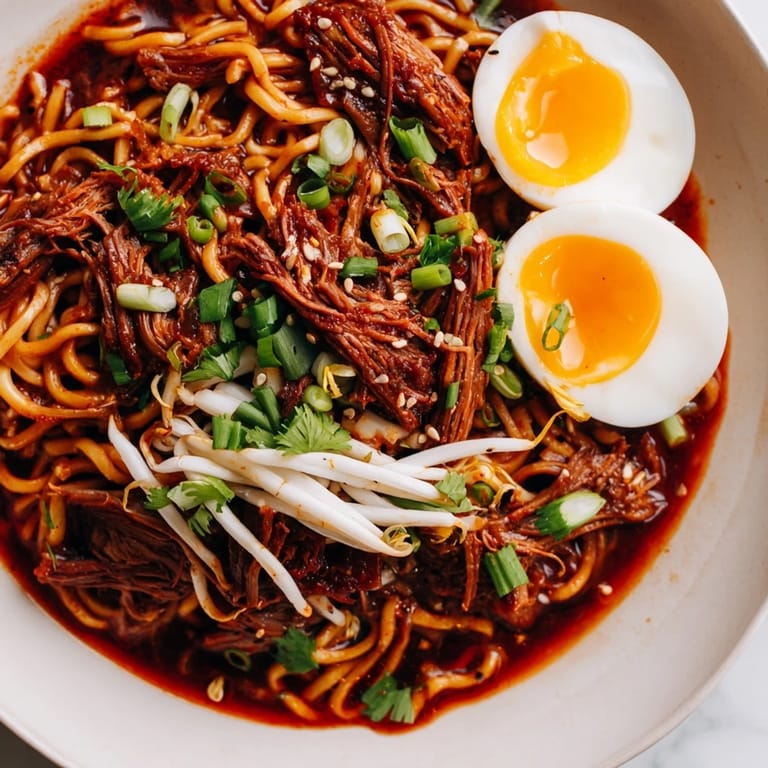
- Layer on the shredded beef, eggs, scallions, sprouts, cilantro, and whatever else you're in the mood for, then serve immediately so everything stays hot and the noodles stay at their best texture.
 Pin It
 I'll never forget the moment my dad, who's skeptical of fusion food, took a spoonful and said nothing, just looked at me, and kept eating. That's when I realized this dish had transcended being clever and become genuinely delicious. It's not about showing off—it's about two culinary traditions respecting each other on the same spoon.
Why the Slow Simmer Changes Everything
The magic of this dish lives in that 2.5 to 3 hour simmer. Most people think they can cut corners here, but that low, gentle heat is literally transforming tough muscle fibers into something you can almost dissolve on your tongue. The longer the beef sits in that chili broth, the more it trades its texture for flavor—it becomes less like meat and more like an edible memory of spices and warmth. I've tried bumping up the heat to speed things along, and it always results in beef that's technically cooked but still feels like it's resisting you. Patience is the real secret ingredient.
Customization Is Built Into the DNA
One of my favorite things about this recipe is that it actively invites people to make it their own. Some people are chili oil devotees, others go straight for lime and cilantro, and there's always someone who piles on every topping and creates their own wild creation. The soft-boiled eggs add a creamy richness when their yolks break into the broth, the bean sprouts give you a crisp moment against all the tender everything, and the scallions cut through the richness with a sharp, fresh note. I've learned that the beauty isn't in getting everyone to eat it the same way—it's in giving them the tools to fall in love with it their own way.
The Flavor Journey from Start to Finish
There's a moment in every spoonful where you taste three distinct things happening at once: the warmth of the spices from the birria broth, the umami punch from the soy sauce and sesame oil, and then that fresh brightness from the lime and cilantro cutting through it all. It's a conversation between flavors rather than a monologue, and I genuinely believe that's why people come back to it again and again. The beef absorbs everything while the noodles provide structure, and by the time you're halfway through the bowl, you're not thinking about the fusion concept anymore—you're just deeply, happily eating.
- Try crispy shallots on top if you want an extra layer of texture and a little sweetness.
- A drizzle of chili oil at the very end adds heat and a golden sheen that makes people think you've been doing this for years.
- If you're making this for guests, prep all the toppings beforehand so assembly becomes a breeze right before serving.
 Pin It
 This dish has quietly become one of those recipes that makes people feel understood, like you knew exactly what they needed without them asking. It's humble and bold at the same time, and that combination is harder to pull off than it sounds.
Recipe FAQs
- → What type of beef is best for this dish?
Beef chuck roast is preferred due to its marbling and tenderness after slow cooking, which yields rich flavor and texture.
- → How long should the beef cook for optimal tenderness?
Simmer the beef for about 2.5 to 3 hours until it becomes very tender and shreds easily for the best results.
- → Can I prepare the broth in advance?
Yes, the broth can be prepared ahead of time and reheated gently to allow flavors to deepen further before serving.
- → What are some popular toppings to enhance this dish?
Common additions include soft-boiled eggs, scallions, bean sprouts, fresh cilantro, lime wedges, and optional chili oil or jalapeños for heat.
- → Is it possible to substitute chicken for the beef?
Chicken can be used as a lighter alternative, adjusting cooking time accordingly to maintain tenderness and flavor balance.
- → How can I make this dish gluten-free?
Use gluten-free ramen noodles and tamari or other gluten-free soy sauce substitutes to accommodate gluten restrictions.