 Pin It
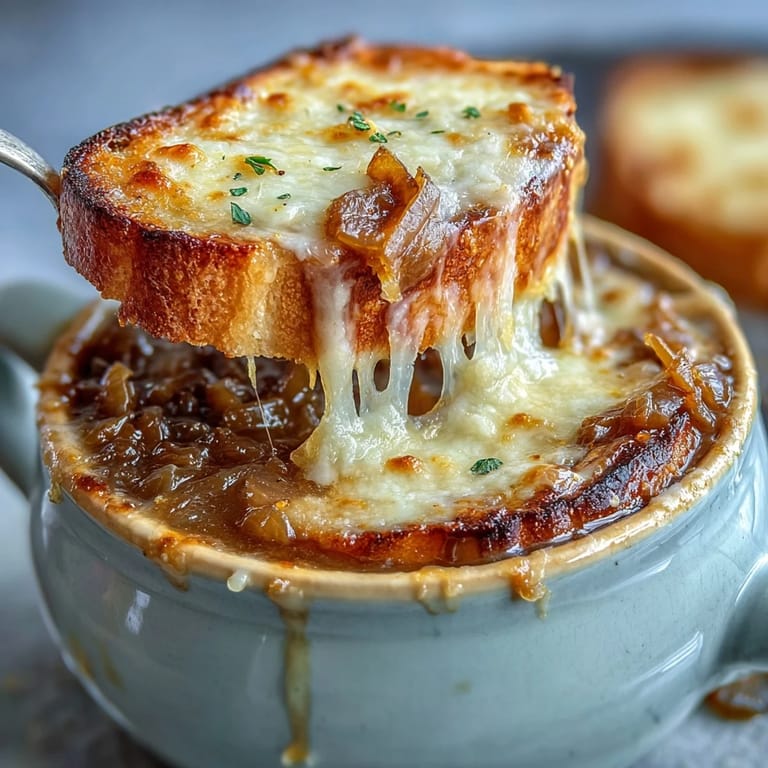
 There's something almost meditative about standing at the stove while onions slowly transform from sharp and pale to something deep and mahogany rich. I stumbled onto the magic of this soup on a particularly gray November afternoon when I was trying to stretch a few humble ingredients into something that felt special. The kitchen filled with this incredible caramel-sweet smell, and by the time I ladled it into bowls with those golden, cheese-topped crostini floating on top, I understood why French chefs have been making this for centuries.
I made this for my neighbor last winter when she was recovering from surgery, and I watched her face light up the moment she tasted it. She said it tasted like the kind of meal that makes you feel taken care of, and honestly, that moment taught me that some dishes are about more than flavor—they're about showing someone you're thinking of them.
Ingredients
- Yellow onions (6 large, thinly sliced): These are your foundation, and they need to be sliced fairly uniform so they cook evenly and transform into that silky, caramelized state that makes this soup sing.
- Unsalted butter and olive oil (3 tbsp and 1 tbsp): The butter gives richness while olive oil prevents burning; together they create the perfect medium for coaxing sweetness from the onions without scorching.
- Sugar and salt (1 tsp each): The sugar doesn't make it sweet—it accelerates the caramelization process and enhances the natural sugars already in the onions, while salt draws out moisture.
- Garlic (2 cloves, minced): Add this only after the onions are caramelized or it'll burn and turn bitter; timing matters here.
- All-purpose flour (2 tbsp): This creates a light thickener that gives the soup body without making it heavy or starchy-tasting.
- Dry white wine (1/2 cup): The acidity cuts through richness and the alcohol cooks off, leaving a subtle depth that rounds out the flavor.
- Beef broth (6 cups): Use good quality broth here because it's the backbone; I've learned that skimping on broth makes the whole dish feel thin and forgettable.
- Fresh thyme and bay leaf: These quiet aromatic herbs build flavor gradually as everything simmers—don't skip them thinking they won't matter.
- Sourdough baguette (1 small, sliced into 1/2-inch rounds): Sourdough's slight tang pairs beautifully with caramelized onions and melted cheese in a way that wonder bread just can't match.
- Gruyere cheese (1 cup, grated): This is the star of the crostini—it melts into rivers and has a subtle nuttiness that feels grown-up and sophisticated.
- Parmesan cheese (1/2 cup, optional): If you add it, it brings a sharper note that makes the cheese layer more complex.
Tired of Takeout? 🥡
Get 10 meals you can make faster than delivery arrives. Seriously.
One email. No spam. Unsubscribe anytime.
Instructions
- Set up your mise en place:
- Slice your onions thin and have everything measured and ready before you start cooking, because once the onions hit the heat, you'll be stirring fairly often and won't want to scramble for ingredients.
- Begin the slow caramel magic:
- In your heavy-bottomed pot, melt butter and olive oil over medium heat, then add the sliced onions along with sugar, salt, and pepper. This is where patience becomes your secret weapon—you're looking at 35 to 45 minutes of fairly frequent stirring as the onions gradually release their moisture, then brown deeply and develop that mahogany color.
- Add garlic and bloom the flour:
- Once your onions are golden and caramelized (they should look like sweet, soft jam), stir in the minced garlic and let it cook for just one minute so it softens without burning. Dust the flour over the top and stir constantly for about two minutes to cook out the raw flour taste.
- Deglaze and reduce:
- Pour in your white wine and use a wooden spoon to scrape up all those flavorful brown bits stuck to the bottom of the pot—that's where all the depth lives. Let it simmer for a couple of minutes so the alcohol cooks off and the wine reduces slightly.
- Build the broth:
- Add your beef broth along with the thyme sprigs and bay leaf, then bring everything to a gentle boil before dropping the heat to a simmer. Let it bubble away uncovered for 25 to 30 minutes, which gives flavors time to marry and the soup to develop body.
- Toast the crostini while soup simmers:
- While you're waiting, preheat your oven to 400°F and arrange baguette slices on a baking sheet. Brush them lightly with olive oil and toast for 5 to 7 minutes until they're golden and crispy, then top each one generously with grated Gruyere (and Parmesan if you're using it).
- Finish the cheese layer:
- Return the topped crostini to the oven for another 3 to 4 minutes until the cheese melts into a bubbly, golden layer. If you want extra indulgence, you can place a crostini on top of each soup bowl and give it a quick blast under the broiler for 1 to 2 minutes.
- Taste and adjust:
- Before serving, remove the thyme sprigs and bay leaf, then taste the soup and season with additional salt and pepper if needed. Everything should feel rich, savory, and balanced—not one-note.
 Pin It
 My favorite moment with this soup came when a friend who usually orders takeout ended up staying for dinner and watching me make the whole thing from start to finish. By the time she took that first spoonful and tasted the result of all that slow cooking, she understood why some dishes are worth the time investment.
The Art of Caramelizing Onions
Caramelizing onions is less about temperature and more about time and patience—it's a slow dance where you're basically coaxing out every ounce of sweetness. I learned the hard way that higher heat just dries them out and makes them stringy; medium heat lets them release their moisture gently, which then evaporates and concentrates all their natural sugars into something almost jam-like. The color should deepen gradually from golden to deep amber, and the whole kitchen should smell like caramel and sweetness.
Wine Pairing and Serving Suggestions
This soup loves a crisp white wine like Sauvignon Blanc or Chablis—the acidity echoes the white wine already in the pot and cuts through the richness of the cheese and cream-like texture of the caramelized onions. I've also learned that if you have access to sherry or brandy, a small splash stirred into the finished soup adds a sophistication that feels almost secret, like you've tucked in a flavor twist that guests can taste but can't quite name.
Make-Ahead Tips and Variations
One of the smartest things I've discovered is that you can actually make the soup base up to two days ahead and reheat it gently—the flavors deepen even more as they sit. The crostini are best made fresh right before serving so they stay crispy, but you can toast the bread and have the cheese grated and waiting. For a vegetarian version, swap vegetable broth for beef and the dish remains entirely satisfying because the caramelized onions carry so much flavor on their own.
- You can add a splash of sherry or brandy to the finished soup for extra depth and warmth.
- Emmental or Swiss cheese work beautifully if you can't find Gruyere.
- Make sure your oven-safe bowls are truly oven-safe if you're planning to broil the final dish.
 Pin It
 This is the kind of soup that makes you feel like you've accomplished something meaningful with your afternoon, and that feeling is honestly just as nourishing as the bowl itself. Make it for someone you care about, and watch their face when they understand why this simple dish has been beloved for generations.
Recipe FAQs
- → How do you achieve perfectly caramelized onions?
Cook sliced onions slowly over medium heat with butter and olive oil, stirring often for 35–45 minutes until they turn deep golden and sweetly fragrant.
- → Can I make this dish vegetarian?
Yes, substitute beef broth with vegetable broth and omit Parmesan cheese to keep it vegetarian friendly.
- → What is the purpose of adding white wine?
White wine helps deglaze the pan and adds subtle acidity that balances the sweetness of caramelized onions.
- → Which bread works best for the crostini?
Sourdough baguette sliced into rounds toasts well, providing a crisp base that complements the melted Gruyere topping.
- → Can I substitute Gruyere cheese?
Gruyere can be swapped with Emmental or Swiss cheese for similar flavor and meltability.
- → Should the crostini be broiled after topping with cheese?
Baking until the cheese melts is sufficient, but broiling for 1–2 minutes adds a bubbly, golden finish if desired.