 Pin It
 I was standing in my kitchen on a random Tuesday night with nothing but instant ramen and a jar of peanut butter, and somehow that became the most satisfying dinner I'd eaten in weeks. There's something about the moment you realize those humble pantry staples can transform into something actually crave-worthy that makes you look at cooking differently. A splash of chili crisp, a squeeze of sesame oil, and suddenly you're not just eating noodles—you're eating something that feels intentional and delicious. This sauce comes together faster than you can boil water, which is exactly when you need it most.
My roommate came home exhausted one evening and watched me throw this together with the kind of skepticism only someone who's had bad ramen can muster. Thirty seconds into eating it, she was texting the recipe to three people. There's a quiet pride in turning something so simple into something someone actually wants to remember and remake.
Ingredients
- 2 packs instant ramen noodles: Skip the flavor packet entirely—it'll only muddy the clean heat of the sauce you're building.
- 3 tablespoons creamy peanut butter: The foundation that makes everything cohesive; natural or conventional both work beautifully.
- 2 tablespoons soy sauce: Your salt anchor and umami depth, non-negotiable for that authentic pull.
- 1 tablespoon chili crisp: The wake-up call that makes people pause mid-bite and ask what just happened.
- 1 tablespoon rice vinegar: Cuts through richness with an almost delicate brightness.
- 1 tablespoon honey or maple syrup: A gentle sweetness that softens the heat without tasting like dessert.
- 2 teaspoons toasted sesame oil: The ingredient that whispers you actually know what you're doing.
- 1 garlic clove, minced: Raw garlic gives you punch; cooked garlic would be sweeter but here you want the assertiveness.
- 3–4 tablespoons hot water: The variable that turns a thick paste into something you can actually coat noodles with.
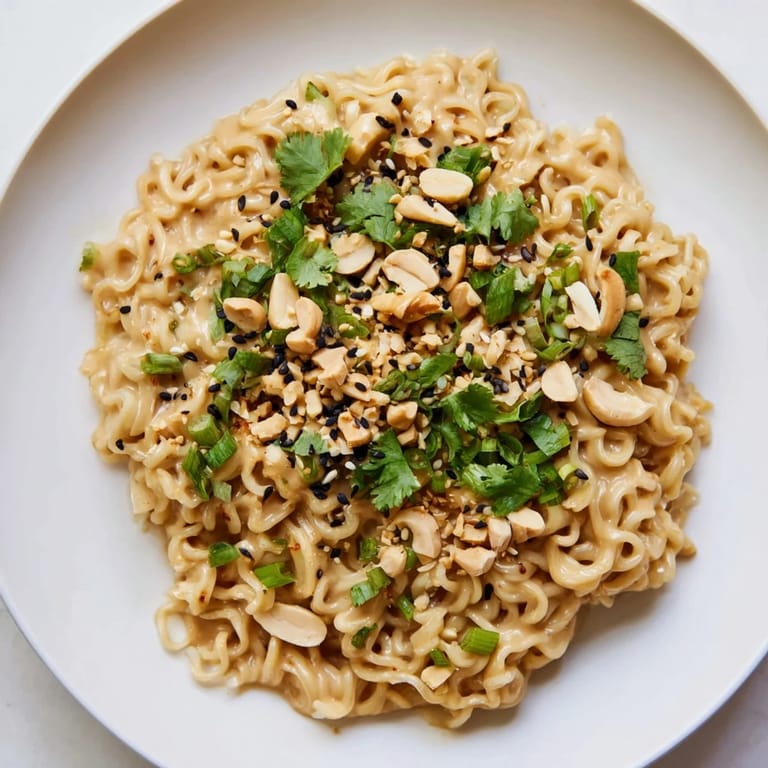
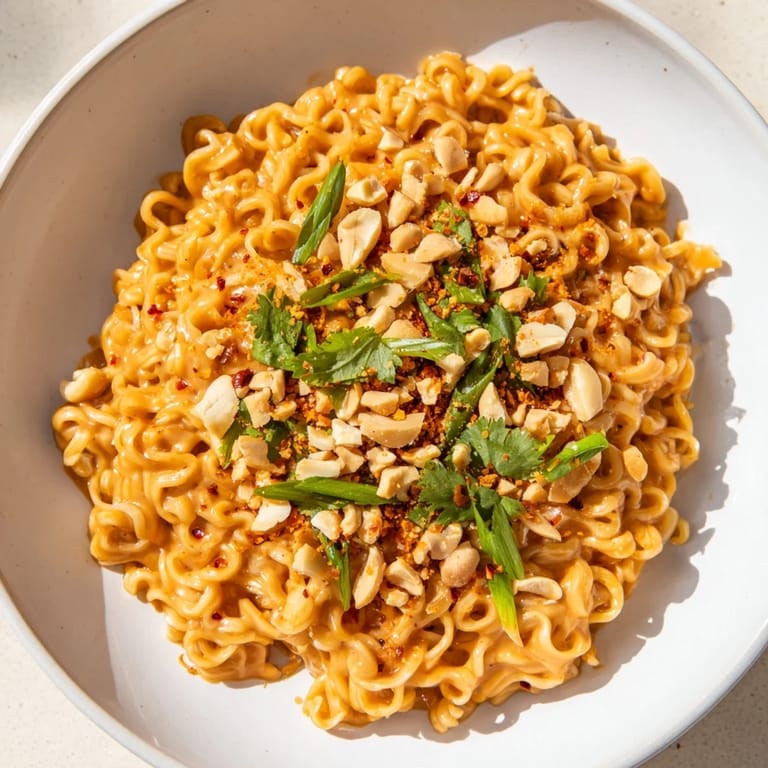
- Toppings (optional but recommended): Scallions add brightness, roasted peanuts bring texture, sesame seeds toast as they sit, cilantro cuts fat, and lime wedges are your personal flavor volume control.
Tired of Takeout? 🥡
Get 10 meals you can make faster than delivery arrives. Seriously.
One email. No spam. Unsubscribe anytime.
Instructions
- Boil your noodles until tender:
- Fill a pot with water and bring it to a rolling boil, then add noodles and cook until they're soft but not falling apart. This usually takes around 3 minutes—set a timer so you don't get distracted and end up with mush.
- Drain and reserve liquid:
- Pour noodles into a strainer and let them drip for a moment, saving 2–3 tablespoons of that starchy water because it's about to become your secret ingredient for achieving the perfect sauce consistency.
- Build the sauce in a bowl:
- Measure peanut butter into a medium mixing bowl and add soy sauce, chili crisp, rice vinegar, honey, sesame oil, and minced garlic all at once. The ingredients will look reluctant to combine at first—that's normal.
- Whisk until it's one thing:
- Use a whisk or fork to work everything together until you see no more streaks of peanut butter. Add your reserved noodle water one tablespoon at a time, whisking between each addition, until the sauce loosens into something pourable but still substantial.
- Toss the noodles to coat:
- Pour your hot noodles into the sauce bowl and use two forks or tongs to toss everything together until each strand is dressed. The warmth of the noodles will help the sauce cling evenly.
- Plate and finish:
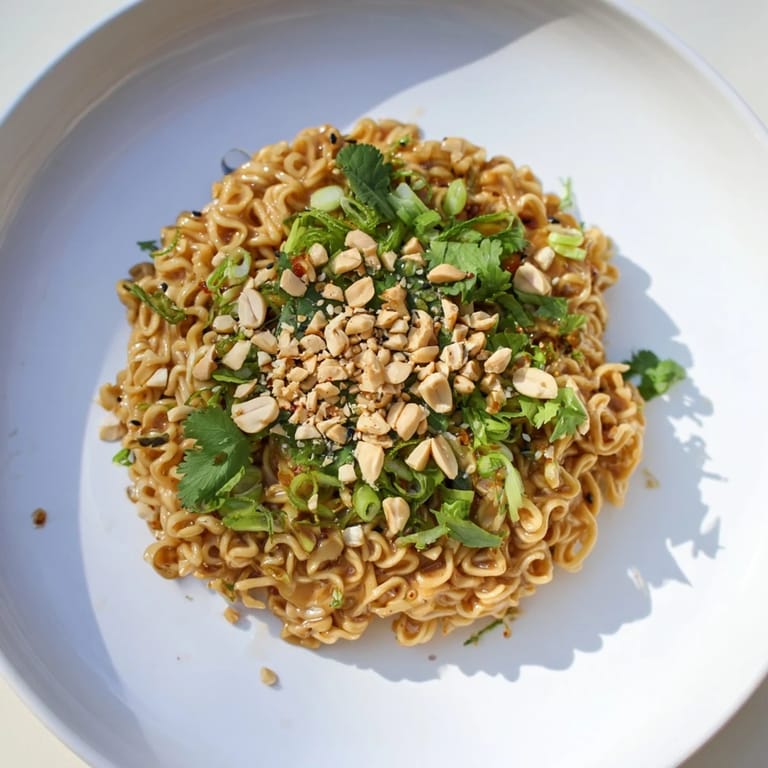
- Divide between two bowls and scatter your toppings across the top—don't hold back on the cilantro and sesame seeds because they're what make someone want to order this again tomorrow.
 Pin It
 The moment that made me return to this recipe over and over was when I realized it works just as well as a late-night solo dinner as it does for unexpected guests. There's something generous about a dish that's this easy but tastes like you actually tried.
The Spice Equation
Chili crisp brings heat that lingers rather than screams, which is what makes it so addictive instead of punishing. If you're cooking for someone who avoids spice, start with half a tablespoon and let them add more at the table—there's no shame in letting people customize their own bowl. The real lesson I learned was that boldness at the source of cooking is always easier to dial back than timidity you're trying to rescue halfway through.
Texture Matters
The contrast between the soft noodles and crunchy peanuts and sesame seeds is what keeps your mouth interested through every bite. Don't skip the toppings thinking they're purely decorative—they're actually essential structure that's doing real work. A bowl of plain sauced noodles is fine; a bowl with those scattered finishes feels intentional and luxurious.
Ways to Make It Yours
This sauce is forgiving enough to welcome additions without losing itself. Some nights I add a soft-boiled egg for richness, other times I stir in some wilted spinach or snap peas for vegetables I can feel good about. The peanut butter base is robust enough to support these changes while staying fundamentally itself.
- Protein upgrades: pan-seared tofu, grilled chicken, a soft-boiled egg, or even leftover shrimp all work beautifully.
- Vegetable additions: steamed broccoli, snap peas, shredded carrots, or whatever you have that needs using.
- Substitute almond butter or sunflower seed butter if peanuts aren't your thing or you're cooking for someone with allergies.
 Pin It
 This recipe proved something I needed to know: the best meals don't require hours or ingredients you can't pronounce. They just require you to notice what you already have and treat it with intention.
Recipe FAQs
- → How do I achieve the perfect sauce consistency?
Whisk in reserved noodle water or hot water gradually until the peanut sauce is smooth and pourable, allowing it to coat the noodles evenly without being too thick or thin.
- → Can I adjust the spiciness level?
Yes, vary the amount of chili crisp according to your heat preference, starting with a small amount and increasing to taste.
- → What are good toppings for extra texture?
Try scallions, roasted peanuts, sesame seeds, fresh cilantro, or a squeeze of lime to add freshness and crunch.
- → Are there alternatives to peanut butter for allergies?
Almond butter or sunflower seed butter can be used as nut-free or allergy-conscious substitutions, maintaining creamy texture and flavor.
- → How can I make this dish more filling?
Add pan-seared tofu, grilled chicken, or a soft-boiled egg for extra protein, or incorporate steamed or stir-fried vegetables for additional nutrition.
- → What noodles work best for this dish?
Instant ramen noodles are recommended for quick cooking and texture, but any thin wheat noodles can be used. Gluten-free options are available with suitable substitutes.