 Pin It
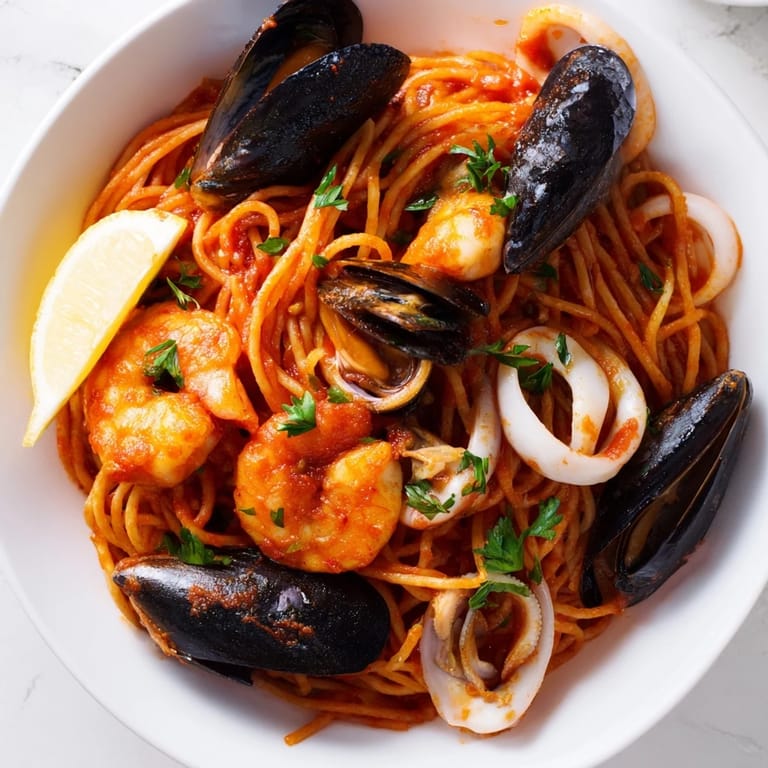
 There's a particular magic that happens when you stand in a kitchen with the window open to a coastal breeze, watching shrimp turn from translucent to coral pink in a bubbling tomato sauce. I discovered this dish not in a restaurant but in my own kitchen on an evening when I'd bought more seafood than I knew what to do with—a beautiful impulse purchase at the market that somehow demanded to become something special. The way the mussels crack open and release their briny sweetness into the sauce, how the squid softens just enough to be tender without becoming rubbery, it all felt like a small triumph the first time I got the timing right. Now, when the craving for something vibrant and uncomplicated strikes, I reach for this recipe without hesitation.
I made this for my sister on a Tuesday night when she mentioned offhandedly that she missed eating seafood since moving inland, and watching her face light up as she twirled spaghetti loaded with shrimp and mussels was worth every minute of prep. She asked for the recipe before she'd finished her first plate, and I realized then that this wasn't just dinner—it was a small gesture that landed exactly right.
Ingredients
- Large shrimp, 200g: Buy them already peeled if you can—it saves time and they cook faster when they're exposed to the heat.
- Mussels, 200g: Choose ones that are tightly closed or snap shut when tapped; discard any that remain open after cooking, as they may not be fresh.
- Squid rings, 150g: These go in first so they have time to tenderize in the sauce without becoming tough.
- Sea scallops, 150g: Pat them dry before cooking—moisture is the enemy of a good sear, even in a simmering sauce.
- Spaghetti or linguine, 350g: Cook it just shy of the package instructions since it'll finish gently in the sauce with a splash of pasta water.
- Olive oil, 2 tbsp: Use something you actually enjoy the taste of—it's one of few ingredients not buried in tomato.
- Onion, 1 small: Finely chopped onion becomes almost invisible but adds a sweet, soft backbone to the sauce.
- Garlic cloves, 3: Mince them fine so they distribute evenly and don't leave raw garlic shards on anyone's plate.
- Red pepper flakes, 1/2 tsp: Optional but worth it—just a whisper of heat makes the tomato flavor snap into focus.
- Canned crushed tomatoes, 800g: San Marzano tomatoes are worth seeking out if you can find them; they have a natural sweetness that feels less acidic.
- Tomato paste, 2 tbsp: This concentrate of umami deepens the sauce in a way fresh tomatoes alone can't.
- Dry white wine, 100ml: Something you'd drink works best—the acidity and subtle fruit flavor becomes part of the sauce's backbone.
- Dried oregano, 1 tsp: Italian oregano has a softer, sweeter note than Greek varieties.
- Dried basil, 1 tsp: It seems humble but it's the ingredient that makes people say this tastes authentically Italian.
- Sugar, 1/2 tsp: A counterpoint to the acidity of tomatoes, not to make it sweet but to make it taste more like itself.
- Sea salt and black pepper: Taste as you go—the pasta water, seafood, and sauce all have their own salt levels.
- Fresh parsley, 2 tbsp chopped: Stir in just before serving so it stays bright green and herbaceous.
- Lemon wedges: That final squeeze of citrus wakes up everything on the plate.
Tired of Takeout? 🥡
Get 10 meals you can make faster than delivery arrives. Seriously.
One email. No spam. Unsubscribe anytime.
Instructions
- Start the pasta:
- Bring salted water to a rolling boil and cook your pasta to just under al dente—it should still have the faintest resistance when you bite it. Drain and reserve that starchy water; it's your secret weapon for silkening the sauce later.
- Build the base:
- While pasta cooks, warm olive oil in a large skillet and coax the onion into softness over medium heat, which takes about 2-3 minutes and smells like the beginning of something good. Add minced garlic and red pepper flakes, letting them bloom for just 60 seconds until your kitchen smells like a coastal Italian restaurant.
- Deglaze with wine:
- Pour in white wine and watch it sizzle and steam as it reduces slightly, concentrating its flavor into the oil and aromatics below.
- Build the sauce:
- Stir in tomatoes, tomato paste, oregano, basil, sugar, salt, and pepper, then let it simmer uncovered for about 10 minutes, stirring occasionally so nothing sticks to the bottom. The sauce will darken and deepen as it simmers, tasting more complex with each minute.
- Add the seafood carefully:
- Begin with squid and scallops, which need a 2-minute head start to soften in the heat. Then add shrimp and mussels, cover the skillet, and cook for 3-4 minutes until shrimp turn pink and mussels have cracked open—discard any stubborn ones that refuse to open.
- Marry pasta and sauce:
- Add the drained pasta to the skillet and toss gently, adding splashes of reserved pasta water until the sauce coats everything in a silky, clingy layer. Taste and adjust seasoning one final time.
- Finish and serve:
- Scatter fresh parsley over the top and serve immediately with lemon wedges on the side, letting everyone squeeze their own so it tastes exactly how they like it.
 Pin It
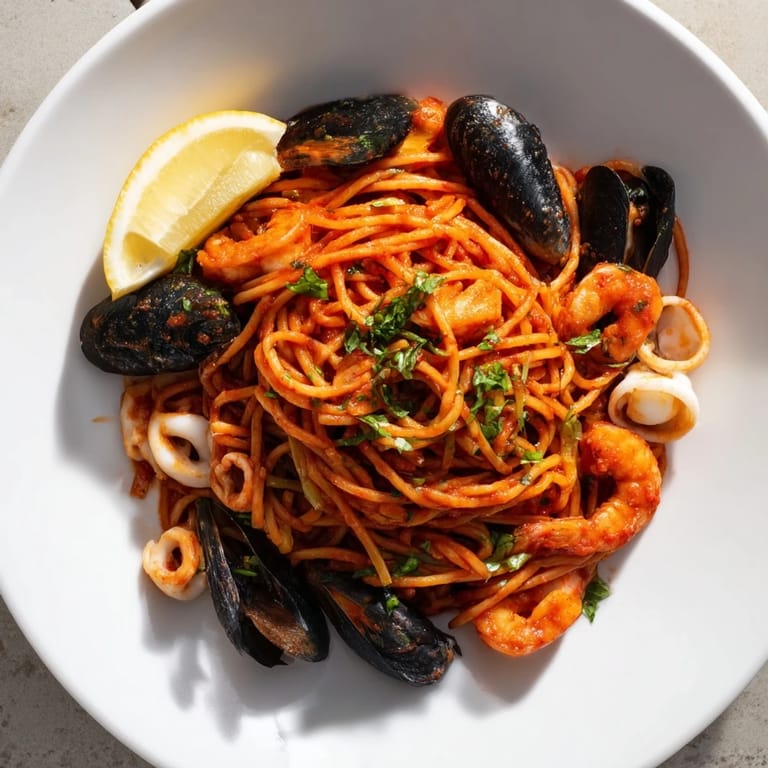
 There was a moment when a friend watched me plate this dish—the seafood glistening in tomato and wine, the pasta twined underneath, a whisper of steam rising—and said it looked like I'd learned to cook in Italy. I hadn't, of course, but somehow this recipe makes anyone feel like they have, and that might be the whole point.
The Seafood Selection
The beauty of this dish is that you're not bound by these exact varieties—the logic works with whatever swims that looks good the day you're cooking. I've substituted clams for mussels when I couldn't find fresh ones, white fish chunks for scallops when I wanted something leaner, and the result is always compelling. The key is choosing seafood that cooks at roughly the same pace, which is why firm, quick-cooking varieties matter more than perfect authenticity.
Wine and Acidity
The white wine does something crucial that fresh tomato juice can't: it adds acidity and a subtle floral note that makes the sauce taste alive instead of flat. If you're uncomfortable cooking with wine, you can skip it and add a splash of fish or seafood stock instead, though you'll lose a little of that brightness that makes people lean back from their plate and smile.
Timing and Temperature
Medium heat is your friend here—too hot and the seafood toughens, too low and it takes forever. Once the mussels start opening, watch closely because they'll be done in moments. The shrimp should turn from translucent gray to solid pink, which is faster than you think.
- If your pan isn't deep enough, use your largest sauté pan or borrow a Dutch oven so you can cover it easily.
- Keep that pasta water nearby before you even start cooking—you won't have time to fetch it once the seafood is in.
- Serve immediately after combining everything or the seafood will keep cooking and toughen as the sauce cools.
 Pin It
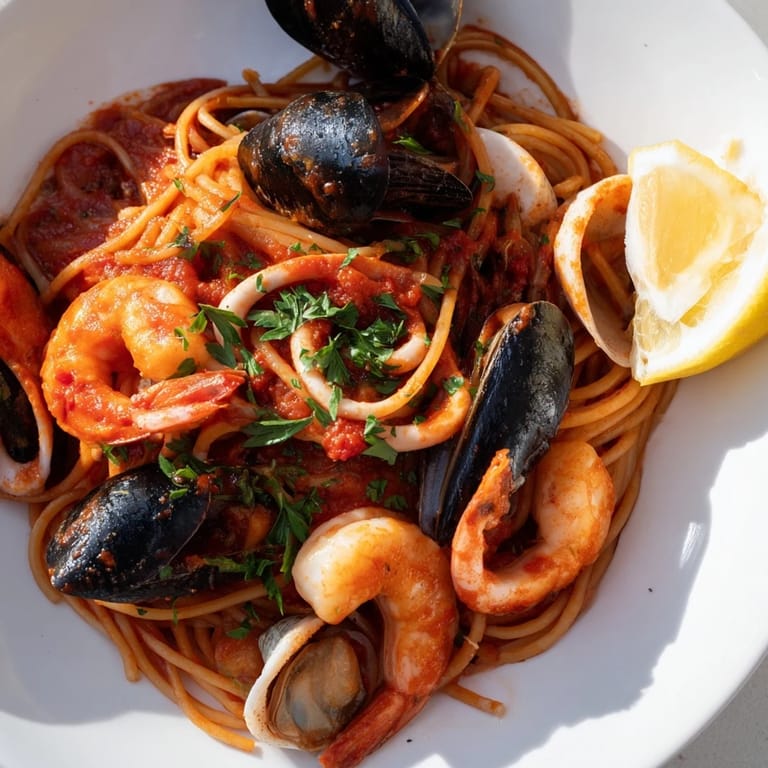
 This is one of those recipes that reminds you why cooking matters—not because it's complicated, but because it's honest food that brings people to the table and keeps them there. Make it tonight and taste the difference that 45 minutes of intention makes.
Recipe FAQs
- → What type of pasta pairs best with this seafood dish?
Spaghetti or linguine work well, as their shape holds the robust tomato sauce and complements the seafood textures.
- → How do you ensure the seafood is cooked perfectly?
Cook squid and scallops briefly first, then add shrimp and mussels, covering the pan until shrimp turn pink and mussels open fully.
- → Can I adjust the sauce's heat level?
Yes, adding or omitting red pepper flakes allows control over the sauce’s spiciness to suit your taste.
- → What is the purpose of reserving pasta water?
Reserved pasta water helps loosen and bind the sauce, ensuring a silky texture that coats the pasta evenly.
- → Are there suitable substitutes for the seafood mix?
Firm white fish or clams can be used as alternatives while maintaining the dish’s fresh maritime character.