 Pin It
 I'll never forget the first time I arranged a twelve-day cheese board for a holiday party—I was inspired by the classic carol, imagining each cheese as a gift waiting to be discovered. Standing in my kitchen, surrounded by twelve different varieties from around the world, I felt like I was creating an edible calendar of culinary joy. That night, watching guests move from one section to the next like they were opening presents, I realized this wasn't just a cheese board; it was an invitation to a flavor journey.
I still remember my sister's face when she discovered the smoked cheese and dark chocolate pairing—a combination she'd never considered before. She circled back to that section three times, and by the end of the night, it was the only one completely empty. That's when I understood: this board isn't just about feeding people, it's about surprising them.
Ingredients
- Brie (50 g): Choose a wheel that's slightly soft to the touch but not oozing; it's your creamy anchor and pairs beautifully with honey and apple
- Aged Cheddar (50 g): The sharp, crystalline bite is what makes fig jam sing—look for one with visible salt crystals
- Manchego (50 g): This Spanish treasure has a nutty sweetness that quince paste was practically invented to complement
- Roquefort or Blue Cheese (50 g): The pungent blue needs a sweet counterpart; pear slices provide the perfect cool relief
- Goat Cheese (50 g): Tangy and fresh, it becomes ethereal when paired with thyme's herbaceous whisper
- Gruyère (50 g): This melting, complex cheese deserves the sharp brightness of whole grain mustard and a briny cornichon
- Camembert (50 g): Soft, earthy, and elegant—apple and almond ground it in a satisfying way
- Gouda (50 g): Its caramel notes are heightened by dried apricot, and dark chocolate adds unexpected richness
- Comté (50 g): Creamy and sweet with subtle vanilla, it loves grapes and walnuts equally
- Pecorino (50 g): Sharp and crumbly, it softens beautifully with honey's warmth and pear's gentle sweetness
- Havarti (50 g): A mild, buttery Danish gem that fig jam transforms into something sophisticated
- Smoked Cheese (50 g): Whether smoked provolone or gouda, this is your wild card—dark chocolate makes it unforgettable
- Artisanal bread or assorted crackers: Choose a variety; some crusty, some delicate, so every cheese has the right vehicle
- Honey (2 tbsp): Use raw, unfiltered honey if possible—it's more flavorful and complements Brie and Pecorino differently
- Fig jam (2 tbsp): This is the secret weapon; it bridges the gap between sweet and savory beautifully
- Whole grain mustard (2 tbsp): The texture and slight spice elevate Gruyère and cornichons into a moment of clarity
- Seedless grapes (24): Cool and refreshing, they provide textural contrast and a palate cleanser
- Dried apricots (12): Chewy and intensely fruity, they're the perfect partner for Gouda's sweetness
- Walnut halves (12): Earthy and slightly bitter, they ground rich cheeses like Roquefort and Comté
- Toasted almonds (12): Buttery and toasted, they add crunch and pair well with creamy, mild cheeses
- Apple slices (12): Cut just before serving and toss lightly in lemon juice to prevent browning; their crisp sweetness complements Brie and Camembert
- Fresh pear slices (12): Like apples, prepare these last moment; their delicate flavor is perfect for blue cheese and Pecorino
- Dark chocolate pieces (12): Quality matters here—choose 70% cacao or higher; the slight bitterness plays beautifully against smoked cheese
- Cornichons (12): These tiny pickles are sharp, briny, and essential for cutting through rich cheeses
- Fresh herbs—thyme and rosemary: These aren't just garnish; they add aroma and signal that this board is crafted with intention
Tired of Takeout? 🥡
Get 10 meals you can make faster than delivery arrives. Seriously.
One email. No spam. Unsubscribe anytime.
Instructions
- Prepare your canvas:
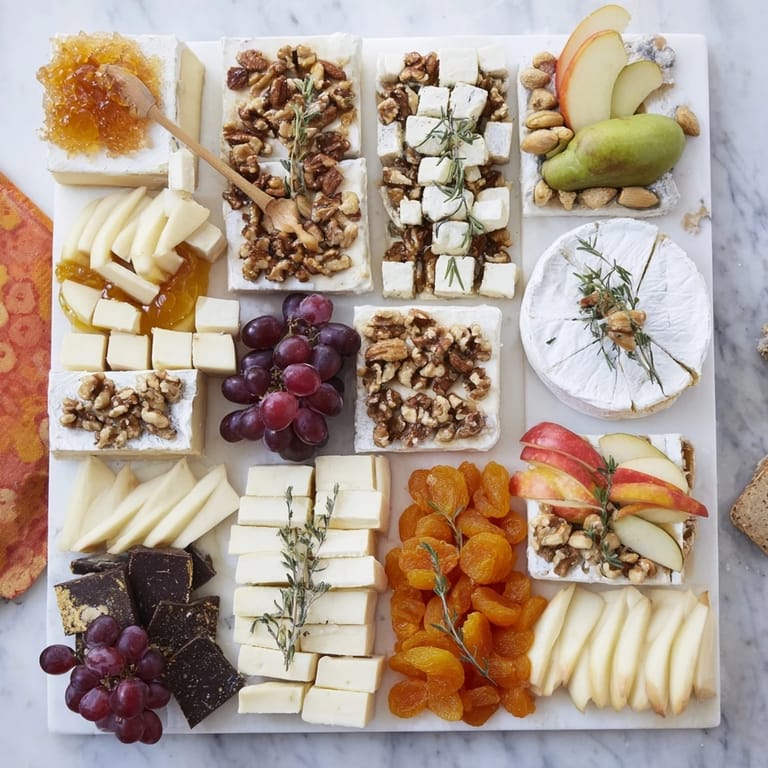
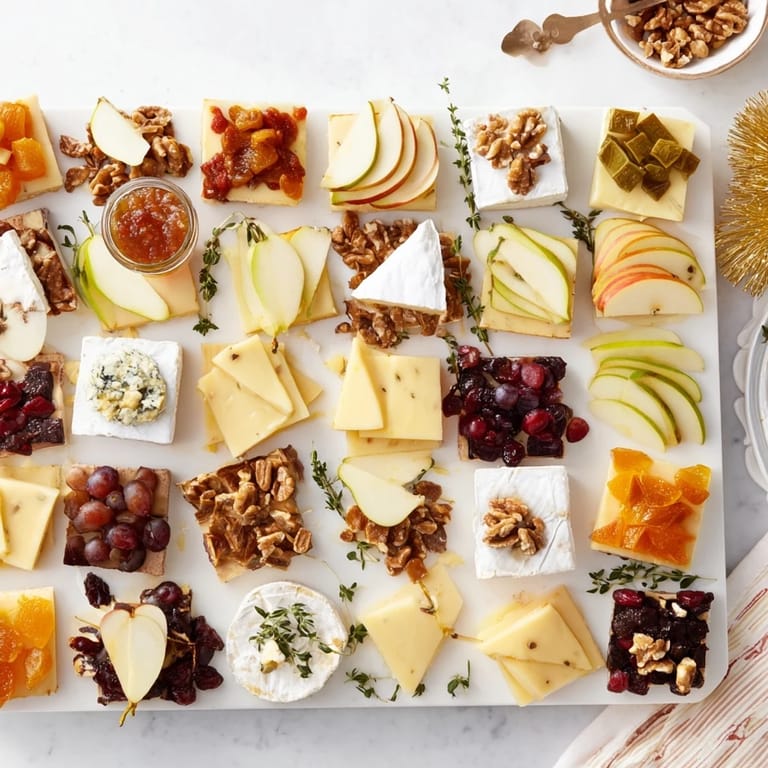
- Find your largest serving board or platter—you're about to create an edible work of art. If you have a beautiful marble board, wooden platter, or even a large white plate, this is the moment to use it. Visualize dividing it mentally into 12 sections, like you're creating a clock face or a grid. If you want crisp divisions, arrange small bowls, ramekins, or even fresh herb bundles to create natural boundaries—this not only looks stunning but also helps your guests understand the flow.
- Arrange your twelve cheeses:
- Remove each cheese from the refrigerator about 15 minutes before serving so the flavors can fully express themselves. Cut them into beautiful, bite-sized pieces—not too small that they disappear, not so large that they intimidate. Place each cheese in its designated section with intention; position it so it's the first thing a guest notices when they look at that spot on the board.
- Build each pairing mindfully:
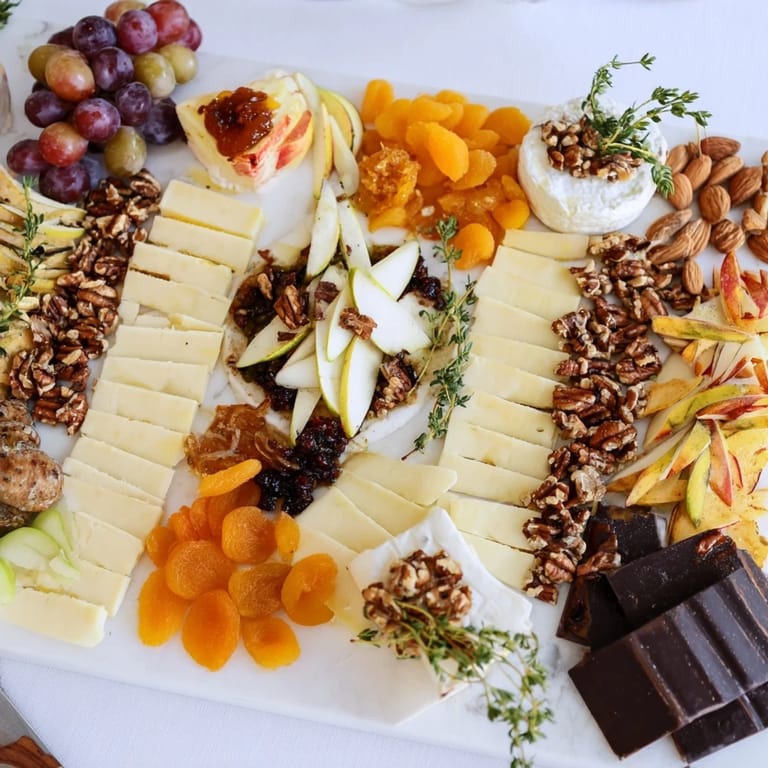
- Now comes the creative part. In each section, pair your cheese with its companion as follows: Brie with honey and an apple slice creates a taste of autumn elegance; aged Cheddar with fig jam and walnut becomes a study in sophisticated contrasts; Manchego with almond speaks of Spanish sunshine; Roquefort with pear slice and walnut is cool complexity; goat cheese with thyme and grapes is fresh and pastoral; Gruyère with mustard and cornichon is sharp, briny, perfect; Camembert with apple and almond is creamy comfort; Gouda with dried apricot and chocolate is your surprise moment; Comté with grape and walnut is pure indulgence; Pecorino with pear and honey is salty-sweet balance; Havarti with fig jam and almond is understated elegance; smoked cheese with cornichon and dark chocolate is bold and memorable.
- Scatter your support system:
- Arrange crackers and bread slices around the outer edges of the board, creating a frame. Make sure you have enough so each guest can approach multiple sections without worrying they've taken the last cracker—abundance signals generosity and sets a gracious tone.
- Add the finishing touches:
- Scatter fresh thyme sprigs and small rosemary branches across the board. These aren't just decoration; when you brush against them, their aroma mingles with the cheese and elevates the entire sensory experience. It signals that this board was made with care and intention.
- Serve with presence:
- Bring the board to room temperature about 20 minutes before guests arrive. Room temperature allows the flavors to bloom fully—cold cheese is shy cheese, and you want your carefully chosen varieties to sing. Place it in the center of the gathering space where it becomes the conversation starter it was meant to be.
 Pin It
 One evening, a guest asked me why I went to so much effort for a cheese board. I realized it wasn't about impressing anyone—it was about creating a moment where everyone at the table felt like they were part of something special, a shared adventure in flavor and discovery.
The Art of Cheese Pairing
What I've learned through making dozens of these boards is that great pairing follows a simple rule: contrast and complement. Bold, funky cheeses like Roquefort need something sweet and cool to balance them—that's why pear works so beautifully. Mild, creamy cheeses like Brie want honey's golden sweetness or fig jam's sophisticated depth. The joy comes from letting each guest discover these combinations themselves, watching their eyes light up when a pairing suddenly makes sense on their palate.
Making It Your Own
This board framework is just that—a framework. Your market and your taste buds are the real guides. If you find a stunning sheep's milk cheese you've never tried, make it one of your twelve. If you discover a local honey or jam that excites you, build a pairing around it. The most beautiful boards I've created happened when I stopped trying to follow a formula and started following my curiosity.
Elevating the Experience
The magic happens when you slow down and create an experience worth savoring. Consider what wine, cider, or sparkling beverage you'll serve alongside—these aren't afterthoughts but partners in the conversation. Pair light wines with delicate cheeses, something with tannins for the bold ones. The board becomes a meditation, each bite a small moment of intentionality in a busy world.
- If hosting during the holidays, arrange your board the morning of and cover it loosely with plastic wrap; it will actually improve as flavors meld slightly
- Place small labels or cards identifying each cheese if your guests aren't familiar with them—knowledge deepens appreciation
- Remember that a generous board is always more inviting than a sparse one; abundance creates abundance of joy
 Pin It
 This board celebrates the idea that good food doesn't require cooking, only intention. It's a love letter to the craft of curation and the joy of sharing.
Recipe FAQs
- → How should I prepare the cheese board for serving?
Arrange cheeses in twelve distinct sections on a large board, pairing each with its specific accompaniment. Keep bite-sized pieces for easy tasting and add crackers or bread around the edges for variety.
- → What cheeses work best for this board?
Use a variety such as Brie, Aged Cheddar, Manchego, Roquefort, Goat Cheese, Gruyère, Camembert, Gouda, Comté, Pecorino, Havarti, and a smoked cheese to offer balanced flavors and textures.
- → Can I substitute any ingredients for dietary needs?
Yes, choose plant-based cheeses for vegan preferences and gluten-free crackers if needed. Fresh fruits and nuts remain great accompaniments for all diets.
- → How to enhance the presentation of the board?
Use small bowls or ramekins to separate sections, garnish with fresh herbs like thyme and rosemary, and arrange breads or crackers artistically around the board.
- → What beverages pair well with this cheese board?
Light reds, sparkling wines, or crisp ciders complement the diverse cheese flavors and accompaniments, elevating the tasting experience.