 Pin It
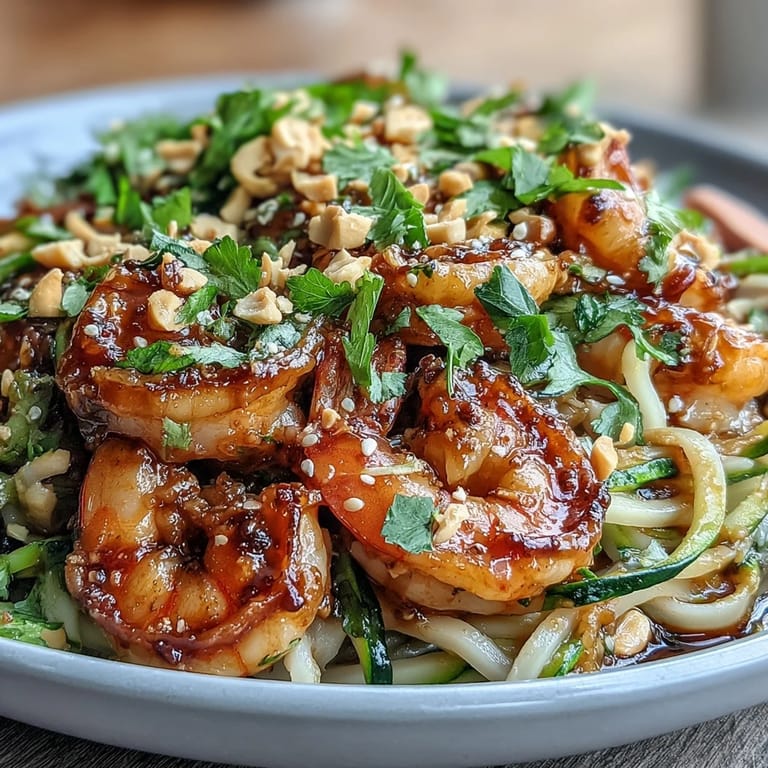
 My coworker Sarah brought this noodle bowl to our office lunch one Tuesday, and I watched three people immediately abandon their sad desk sandwiches to hover around her container. The aroma alone—that perfect blend of sesame, lime, and toasted peanuts—felt like an invitation to somewhere warmer. She laughed at our reaction and said it took her maybe twenty minutes from start to finish, which seemed impossible given how restaurant-quality it looked on the plate.
I made this for my partner on our first Friday night staying in after months of chaotic schedules, and something about the ritual of tossing everything together in the wok felt meditative. The way the noodles glistened under the sauce, how the shrimp curled into those perfect pink crescents—it didn't feel rushed or thrown together. We ate straight from the bowls while sitting on the kitchen counter, trading bites and tasting each other's sauce-to-vegetable ratios, which is basically foreplay for people like us.
Ingredients
- Medium shrimp (400 g): Look for shrimp that feel firm to the touch, not mushy, and buy them from a fishmonger you trust if possible—they genuinely taste fresher.
- Rice noodles (200 g): These cook in minutes and won't turn into mush like some pasta does, but the key is rinsing them cold after cooking so they don't clump together.
- Zucchini and carrot, julienned: The knife work here matters less than keeping them roughly the same thickness so they cook evenly—I use a vegetable peeler sometimes when I'm feeling lazy and it works just fine.
- Garlic (2 cloves): Mince it fine so it distributes throughout the pan quickly; undercooked garlic tastes harsh but thirty seconds in hot oil transforms it completely.
- Green onions (3): Slice them just before cooking so they stay vibrant and fresh, not wilted and oxidized.
- Soy sauce (3 tbsp): Use low-sodium if you can, because the noodles and shrimp already carry salt, and gluten-free tamari swaps in seamlessly if needed.
- Lime juice (2 tbsp): Fresh lime is non-negotiable here—bottled tastes tinny and misses the point entirely.
- Sesame oil (1 tbsp): A little goes a long way, and toasted sesame oil has way more personality than the neutral kind.
- Honey or maple syrup (1 tbsp): This rounds out the sauce and prevents it from being too sharp, creating something that actually tastes intentional.
- Chili garlic sauce (1 tsp, optional): Add this if you want heat, or leave it out if you're cooking for someone who thinks black pepper is spicy.
- Roasted peanuts (50 g): Chop them roughly so some pieces are chunky for texture and some are fine for distribution.
- Fresh cilantro (1/3 cup): Tear it gently instead of chopping so it releases its aroma without bruising the leaves.
Tired of Takeout? 🥡
Get 10 meals you can make faster than delivery arrives. Seriously.
One email. No spam. Unsubscribe anytime.
Instructions
- Cook the noodles until tender:
- Fill a pot with water, bring it to a boil, then add rice noodles and stir gently so they don't stick to each other. Most packages say three to five minutes, but taste one at the two-minute mark because they're often done faster than you'd expect.
- Rinse and prepare them:
- Drain the noodles in a colander and run cold water over them, tossing gently with your fingers to stop the cooking. This prevents them from becoming a gluey mass.
- Whisk the sauce together:
- In a small bowl, combine soy sauce, lime juice, sesame oil, honey, and chili garlic sauce if using, stirring until the honey dissolves completely. Taste it before you add it to everything else—this is your moment to adjust flavors.
- Get your wok hot and fragrant:
- Set a large skillet or wok over medium-high heat, add a splash of neutral oil, then toss in the minced garlic for about thirty seconds until the kitchen smells undeniably delicious. Don't walk away during this part or it burns.
- Cook the shrimp until they curl:
- Add the shrimp and let them sit for about ninety seconds before turning them once, then cook another ninety seconds or until they're opaque and slightly pink. This shouldn't take more than three minutes total, and overcooked shrimp are rubbery and sad.
- Move the shrimp aside and cook vegetables:
- Push the cooked shrimp to the edge of the pan, add the julienned zucchini and carrot to the center, and let them cook undisturbed for a minute so they get a little color. Then toss everything together for another minute or two until the vegetables have some give but still have a little snap.
- Bring everything together:
- Add the cooked noodles, green onions, and sauce to the pan, tossing gently but thoroughly so every strand gets coated and warmed through. This is when the magic happens and it starts to smell like restaurant food.
- Warm through and serve:
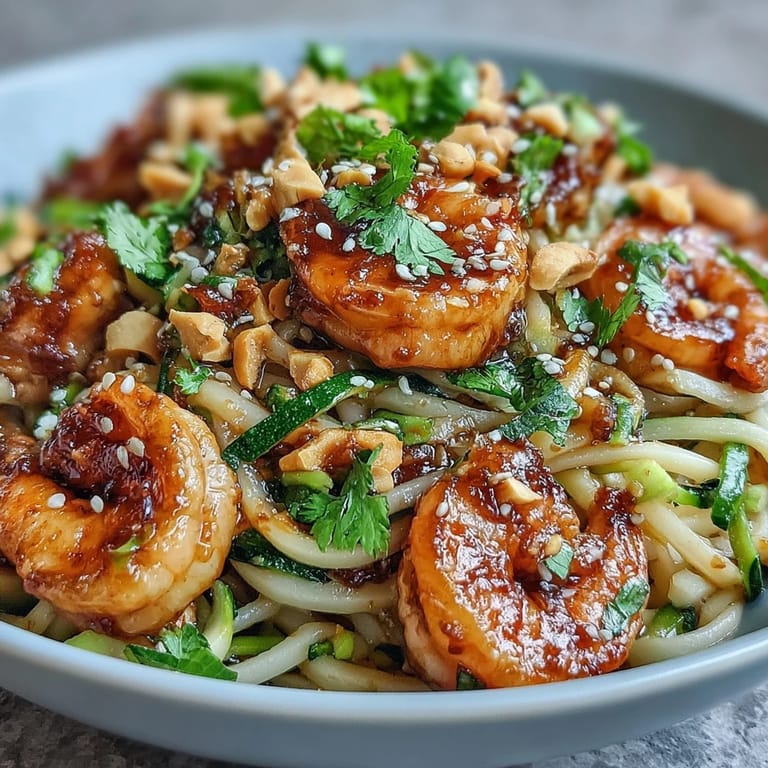
- Return the shrimp to the pan, toss everything one final time, and divide among four bowls immediately while everything is still steaming. Top each bowl with chopped peanuts, cilantro, and a lime wedge for squeezing.
 Pin It
 My neighbor tasted this through our open kitchen window one summer evening and invited herself over within five minutes, which is how I learned this dish is basically a friendship accelerator. We've made it together at least a dozen times since, each time tweaking it slightly based on whatever we found at the market that day, and it never disappoints.
Why Rice Noodles Make All the Difference
Rice noodles have this quality where they absorb sauce without becoming waterlogged, and they cook so quickly that your whole meal is done before your patience runs out. They're also naturally gluten-free, which means you don't have to feel guilty about serving this to friends with dietary restrictions. The slight chewiness of a properly cooked rice noodle is its own reward.
The Lime-Sesame Balance That Matters
This sauce works because lime brings brightness and sesame oil brings depth, and they actually need each other to be interesting. When I skip the lime thinking I'll use lime juice later, the whole thing tastes flat and one-dimensional, so don't be tempted to substitute or postpone any of the sauce components. The honey isn't there to make it sweet—it's there to give the salty and sour ingredients something to rest against.
Building Your Own Bowl Without Overthinking It
The best part about this recipe is that it's basically a template for whatever vegetables and proteins you have on hand. I've made it with snap peas instead of zucchini, grilled chicken instead of shrimp, cashews instead of peanuts, and it's been wonderful every single time. The sauce and noodle base hold everything together, so you can be creative without worrying you're doing it wrong.
- Feel free to add thinly sliced bell peppers, cucumber, or even shredded cabbage for extra crunch and freshness.
- If you're cooking for someone with nut allergies, toasted sesame seeds are genuinely a perfect replacement for the peanuts and add their own nutty depth.
- Make the sauce ahead of time and keep it in the fridge so assembly becomes almost thoughtless on busy nights.
 Pin It
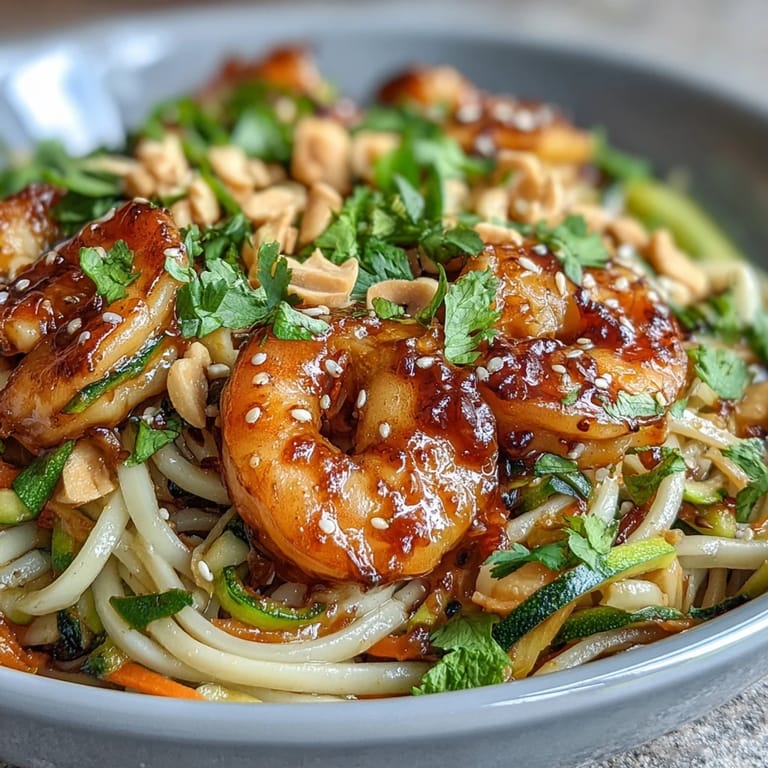
 This recipe became my answer to the question of what to make when I'm tired but still want something that feels intentional and delicious. It never feels like a compromise.
Recipe FAQs
- → Can I make this Asian noodle bowl ahead of time?
Prepare the sauce and vegetables in advance, but cook the noodles and shrimp just before serving. Rice noodles can become gummy if sitting too long in sauce. Store components separately and combine when ready to eat.
- → What other proteins work well in this dish?
Tofu, chicken breast, or even beef strips make excellent substitutes for shrimp. Adjust cooking times accordingly—tofu needs just 2-3 minutes to brown, while chicken requires about 5-6 minutes to cook through completely.
- → How can I add more vegetables to this bowl?
Snap peas, red bell pepper strips, bok choy, or shredded cabbage all work beautifully. Add heartier vegetables like carrots and peppers during the initial stir-fry, but toss in delicate greens like bean sprouts at the very end.
- → Is this dish spicy?
The base dish is mild with just a hint of heat from garlic. The chili garlic sauce is optional—start with ½ teaspoon if you're sensitive to spice, or increase to 1-2 teaspoons for more kick. You can also add fresh sliced chilies as a garnish.
- → Can I use other types of noodles?
Soba noodles, udon, or even spaghetti work as substitutes. Rice noodles are traditional for their light texture, but whole grain spaghetti adds fiber and nutty flavor. Just adjust cooking time according to package instructions.