 Pin It
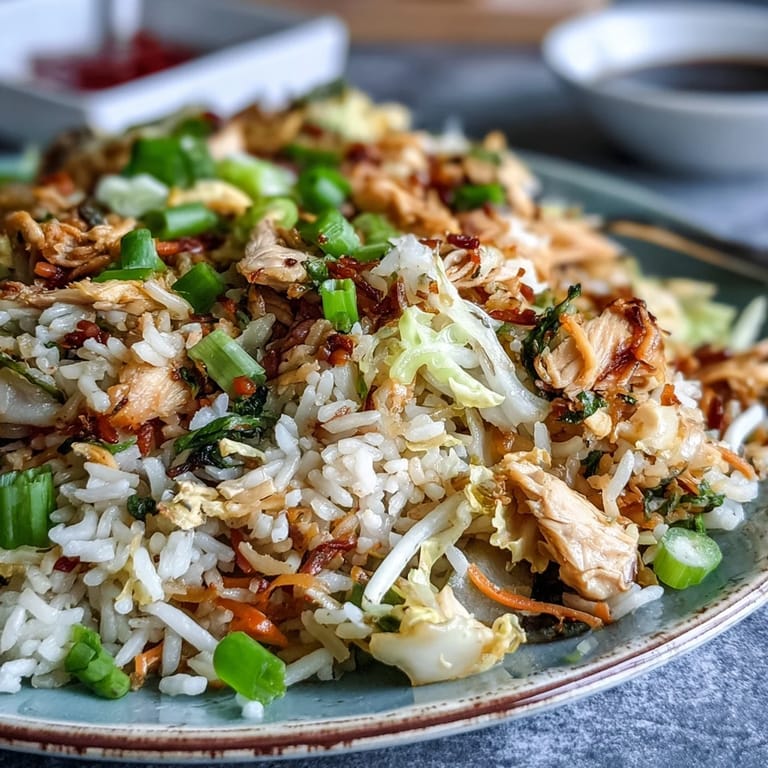
 My neighbor brought this over on a Tuesday night when I was too tired to think about dinner, and I watched her throw together what she called egg roll fried rice with the kind of confident, unfussy energy that makes you trust someone immediately. The smell of garlic and ginger hitting the hot pan was so intoxicating that my kids appeared in the kitchen like magic, drawn by invisible threads of aroma. She explained it was just egg roll filling logic applied to fried rice—no fussy rolling, no deep frying, just pure comfort in a bowl. I've made it dozens of times since, and it's become my go-to when I need something that tastes like it took hours but only demanded twenty minutes of actual work.
I remember making this for my sister after she came home from the hospital, and her face when she took the first bite—that quiet moment where someone realizes they're eating something that actually tastes good and makes them feel cared for—made me understand why home cooking matters so much. She asked for seconds before she'd finished her first helping, and that's when I knew this recipe had staying power.
Ingredients
- Cooked chicken breast, shredded or diced (2 cups): This is your protein anchor, and using leftover rotisserie chicken is a total game-changer if you're short on time—the meat already has flavor built in.
- Large eggs (2): These scramble into golden pockets throughout the rice, adding richness and making every bite feel more substantial than it should.
- Green cabbage, thinly sliced (2 cups): The heart of the egg roll flavor profile, and slicing it thin means it softens beautifully in the wok without turning mushy.
- Carrots, julienned or shredded (1 cup): They stay crisp-tender and add natural sweetness that balances the salty-savory soy sauce.
- Green onions, sliced (1/2 cup, plus extra for garnish): Save some raw for the top—that fresh onion crunch is what separates this from being just another fried rice.
- Bean sprouts, optional (1/2 cup): If you use them, add them near the end so they keep their delicate bite instead of wilting into nothing.
- Cooked jasmine or long-grain rice, chilled (3 cups): Day-old rice is actually your friend here—fresh warm rice turns mushy, but cold rice breaks apart and fries up golden and separated.
- Garlic, minced (3 cloves): The base note of flavor; don't rush this step, let it bloom in the oil for just a moment before the other ingredients jump in.
- Fresh ginger, minced (1 tablespoon): This is what gives the dish that authentic egg roll warmth, so don't skip it or use powdered ginger as a substitute.
- Low-sodium soy sauce (3 tablespoons): Go low-sodium so you control the salt level and can taste all the other players in the dish.
- Oyster sauce, optional (1 tablespoon): This adds umami depth and a subtle sweetness, but if you don't have it or need gluten-free, the soy sauce alone is honest and sufficient.
- Toasted sesame oil (1 teaspoon): A little goes a long way—this is a finishing oil, not a cooking oil, so add it at the end for maximum nutty aroma and flavor.
- White pepper, or black pepper (1/4 teaspoon): White pepper is more subtle and keeps the dish looking clean without dark specks, but whatever you have works.
- Vegetable oil (2 tablespoons): Split between cooking the aromatics and the eggs; use something neutral that can handle high heat.
Tired of Takeout? 🥡
Get 10 meals you can make faster than delivery arrives. Seriously.
One email. No spam. Unsubscribe anytime.
Instructions
- Get your ingredients prepped and ready:
- Measure everything and have it sitting within arm's reach of your stove—fried rice moves fast, and scrambling to find the soy sauce while your pan is screaming hot is a surefire way to burn something. This is the one moment you want to be boring and organized.
- Heat the pan and wake up the aromatics:
- Pour 1 tablespoon of oil into your largest skillet or wok over medium-high heat until it shimmers and moves like liquid mercury across the surface. The second it's ready, add the garlic and ginger and listen for that immediate sizzle—let it stay for about 30 seconds, no more, so it becomes fragrant but not brown.
- Build the vegetable base:
- Throw in the cabbage and carrots, and keep your spatula moving for 3 to 4 minutes—you're looking for them to soften just enough that the cabbage starts to collapse slightly at the edges while the carrots still have a gentle firmness. The kitchen will smell like a proper egg roll at this point, and that's exactly where you want to be.
- Make room for the eggs:
- Push all those vegetables to the side of the pan like you're creating a bare stage, then add the remaining tablespoon of oil to the empty space. Quickly pour in your beaten eggs and let them sit for just a moment before scrambling—you want soft, creamy curds, not brown bits.
- Reunite everything and add the chicken:
- Once the eggs are set but still tender, toss them together with the vegetables, then add your shredded chicken and bean sprouts if you're using them. Stir everything for 1 to 2 minutes until the chicken is heated through and the whole pan feels unified.
- Introduce the rice:
- Add your cold rice in stages, breaking up any clumps with the back of your spatula as you go—if you dump it all in at once, you'll end up with fried rice nuggets instead of individual grains that move freely through the pan. Keep stirring for 2 to 3 minutes until everything is hot and well distributed.
- Season and finish:
- Drizzle the soy sauce, oyster sauce if you're using it, and sesame oil over everything, then sprinkle with white pepper. Stir until every grain of rice has a light coat of sauce and the whole dish shines slightly—this takes about a minute of focused tossing.
- Add the final green onions and taste:
- Toss in the sliced green onions, reserving a generous handful for garnish, then pause and actually taste a spoonful before you serve it. Sometimes you need a touch more soy sauce, sometimes a squeeze of lime if you have it—trust your palate.
- Plate and celebrate:
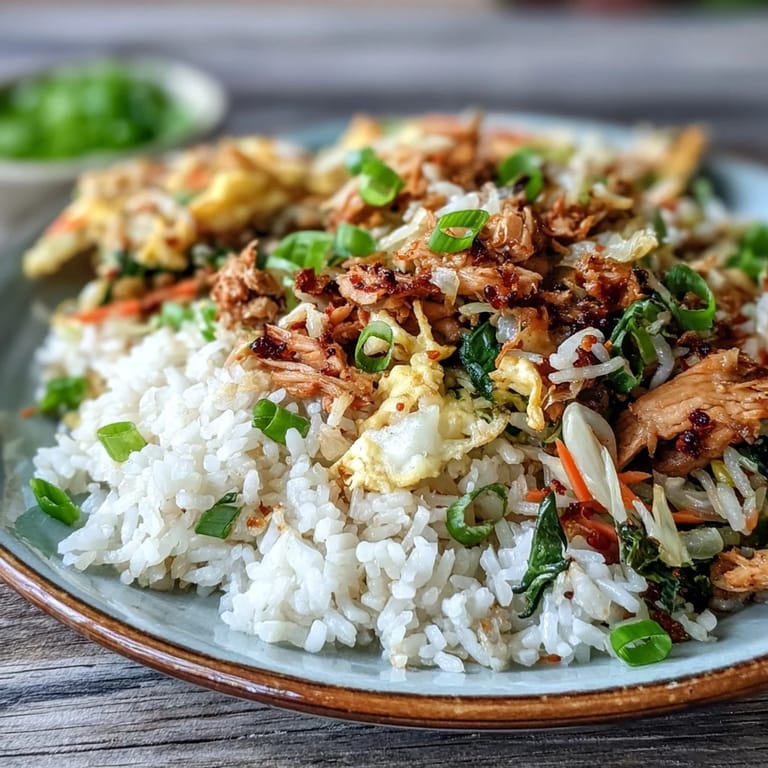
- Spoon everything into bowls while it's still steaming, scatter those reserved green onions on top, and bring it to the table. The whole process should feel quick and triumphant, not stressful.
 Pin It
 There was an evening when my eight-year-old asked if we could make this together, and watching him carefully measure the ginger and crack the eggs into a bowl reminded me that good food doesn't have to be complicated to be worth sharing. We made a mess, he got distracted halfway through, but when we finally sat down to eat, he told me it was better than the restaurant version—and I think he meant it.
Why This Works as Comfort Food
There's something deeply satisfying about a one-pan meal that delivers restaurant-quality flavor without pretense, and this egg roll fried rice hits that mark every single time. The combination of familiar textures—tender chicken, soft vegetables, fluffy eggs, chewy rice—makes it feel like a complete meal in itself, the kind of thing that silences conversation because everyone's too busy eating. It's humble enough for Tuesday night but gracious enough to serve when you want to feed someone something that says you care.
The Versatility Factor
Once you've made this a couple of times and understand the basic rhythm, it becomes a template for whatever you have in your fridge—leftover shrimp, chopped broccoli, diced bell peppers, even frozen peas all work beautifully. I've made it with tofu for vegetarian friends, and honestly, the dish doesn't lose anything; it just becomes a different kind of delicious. The egg roll flavoring is strong enough that substitutions feel intentional rather than improvised.
Building Your Own Version
The real magic here is understanding that you're chasing the flavor profile of a spring roll, just applied to fried rice instead—so think garlic, ginger, cabbage, and soy as your North Star, and build from there. The sesame oil at the end is the secret whisper that ties everything together and makes people ask what's special about your version compared to other fried rice they've had. Once you feel confident with this base, you can play around with heat levels, add a dash of fish sauce, experiment with different rice varieties, or throw in a handful of cashews for texture.
- Water chestnuts or snap peas add a welcome crunch that keeps the dish from feeling too soft and homogeneous.
- A squeeze of fresh lime juice right before serving brightens everything and cuts through the richness beautifully.
- If you make this regularly, invest in a good wok or a really wide, heavy skillet—it changes the entire cooking experience and how quickly you can bring everything together.
 Pin It
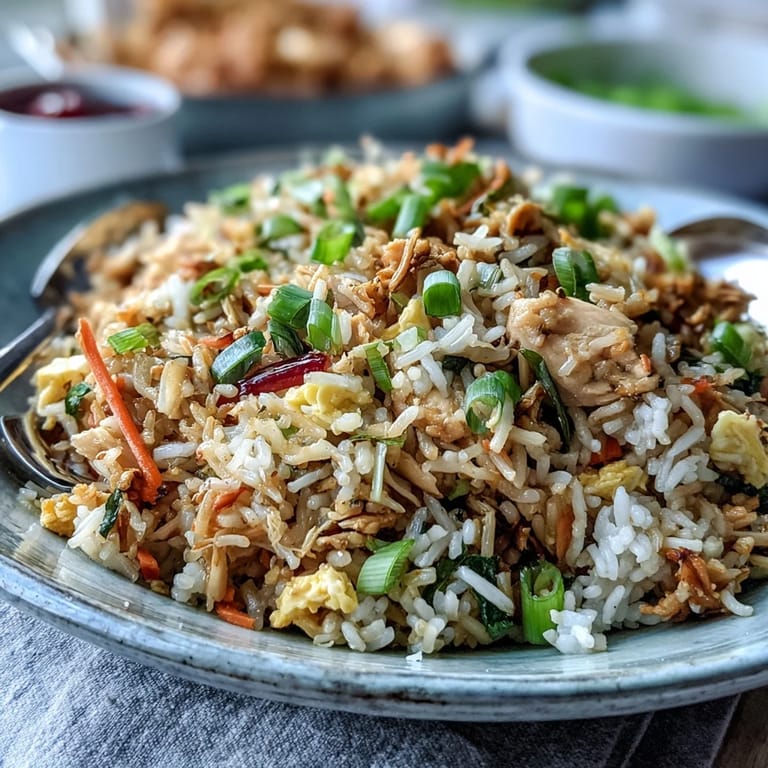
 This is the kind of recipe that sneaks into your rotation and never leaves, the weeknight answer to cravings for takeout that you end up making better at home. It's proof that simple, honest cooking done with a little attention and care tastes better than anything you could order.
Recipe FAQs
- → Can I use freshly cooked rice instead of chilled?
Freshly cooked rice tends to become mushy when stir-fried. For best results, use rice that's been refrigerated at least 4 hours or overnight. The grains firm up in the cold, allowing them to separate properly and develop that signature slight crunch. If you must use fresh rice, spread it on a baking sheet and freeze for 15-20 minutes before cooking.
- → What's the best way to shred chicken for this dish?
Rotisserie chicken works beautifully here—simply remove the skin and shred the meat with two forks or your fingers. Alternatively, poach boneless chicken breasts in simmering water for 15 minutes until cooked through, then let cool before shredding. Diced chicken breast also works if you prefer chunkier pieces throughout the fried rice.
- → Can I make this vegetarian or gluten-free?
Absolutely. For vegetarian, substitute the chicken with firm tofu cubes or edamame. For gluten-free, replace soy sauce with tamari and either omit oyster sauce or use a certified gluten-free version. The rest of the ingredients—cabbage, carrots, eggs, and rice—are naturally gluten-free, making adaptation simple.
- → How do I prevent the eggs from overcooking?
Push vegetables to one side of the pan before adding beaten eggs. Scramble quickly over medium-high heat until just set but still slightly moist—about 30-45 seconds. Immediately mix with the vegetables; they'll finish cooking gently when combined with rice. This method keeps eggs tender rather than rubbery.
- → What other vegetables can I add?
Beyond the classic cabbage and carrots, try adding diced bell peppers, snap peas, water chestnuts for crunch, or baby corn. Mushrooms, particularly shiitake, add wonderful umami. Just keep total vegetable quantity similar to maintain proper rice-to-vegetable ratio, ensuring every bite remains balanced.