 Pin It
 The year I actually attempted a King Cake, I was standing in my kitchen at 6 a.m. on Fat Tuesday, second-guessing myself while my hands were already dusted with flour. My neighbor had casually mentioned hers always looked like a beautiful golden braid, and something about that image stuck with me through the winter. This version with the tart lemon filling came together almost by accident—I had cream cheese and lemons on hand, and the combination felt right the moment I tasted it.
I'll never forget when my sister walked in during the second rise and just stood there, watching the dough puff up under its towel cover like something magical. She didn't say anything, just made coffee and waited. When it came out of the oven with those colors on top catching the morning light, she actually gasped—and that moment made every minute of planning feel completely worth it.
Ingredients
- All-purpose flour (4 cups): This is your foundation, and measuring it properly (spoon and level, not packed) makes all the difference between a tender crumb and something dense.
- Active dry yeast (2 1/4 tsp): Make sure it's fresh—I learned this the hard way when a packet from the back of my cabinet just sat there doing nothing.
- Whole milk and warm water (1/2 cup each): The combination creates a dough that's tender and rich without being too heavy, and the warmth wakes up the yeast.
- Eggs and melted butter (2 eggs, 1/4 cup butter): These add richness and that gorgeous golden color you want in a celebration bread.
- Cream cheese (8 oz): Make sure it's truly softened to room temperature—cold cream cheese will fight you during mixing and create uneven texture.
- Lemon juice and zest (2 tbsp juice, 1 tsp zest): Fresh is non-negotiable here; bottled juice tastes tinny against the sweetness.
- Colored sanding sugar: This is where your personality shows—purple, green, and gold in those stripes is traditional, but the colors are really up to you.
Tired of Takeout? 🥡
Get 10 meals you can make faster than delivery arrives. Seriously.
One email. No spam. Unsubscribe anytime.
Instructions
- Bring your yeast to life:
- Combine warm water, milk, and yeast in a large bowl and let it sit for 5 minutes until it's noticeably foamy on top—that foam is your signal that everything's going to work. If you don't see foam, your yeast is dead and you need to start over.
- Build the dough base:
- Add sugar, eggs, melted butter, and salt to your foamy mixture and stir well, then gradually add flour until a soft dough forms. You want to do this gently enough that you're not creating a cloud of flour everywhere.
- Knead until smooth:
- Transfer the dough to a floured surface and knead for 8 to 10 minutes, working until it becomes smooth, elastic, and springs back when you poke it. Your hands will feel the exact moment it transforms from shaggy to silky.
- First rise:
- Place the dough in a greased bowl, cover it with a clean towel, and let it sit in a warm spot (near a sunny window works) for about 1.5 hours until it's roughly doubled in size. The bowl should feel noticeably heavier when you pick it up.
- Prepare the filling:
- While the dough rises, beat the softened cream cheese until it's completely smooth, then add sugar, fresh lemon juice, lemon zest, and an egg yolk, blending until creamy and pale. Don't skip the egg yolk—it gives the filling structure and a silkier texture.
- Shape your braid:
- After the dough has risen, punch it down, turn it onto a lightly floured surface, and roll it into a 10x18-inch rectangle. Spread the lemon filling lengthwise down the center third, then use a sharp knife to cut diagonal strips about 1 inch wide on both sides, leaving the center intact.
- Fold into a braid:
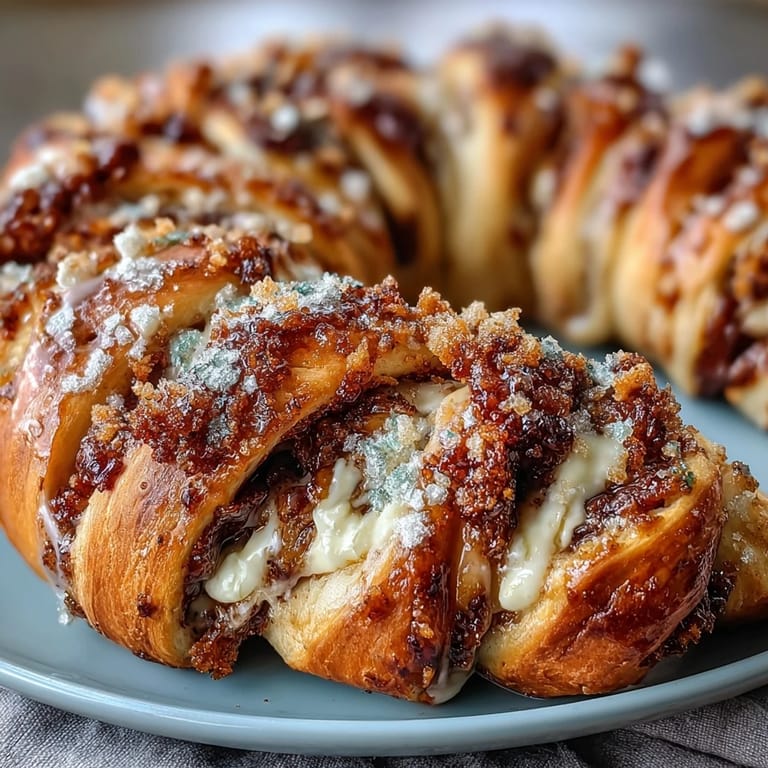
- Fold those diagonal strips alternately over the filling—left, right, left, right—until they're all folded over and tucked under at the ends to seal. This is the moment you'll feel proud of yourself, even if the braids aren't perfectly even.
- Second rise:
- Transfer the braided dough to a parchment-lined baking sheet, cover loosely, and let it rise for about 45 minutes until it looks noticeably puffy. The dough should be light to the touch.
- Bake to golden perfection:
- Preheat your oven to 350°F, brush the entire braid with egg wash (one egg beaten with 1 tablespoon milk), then bake for 28 to 32 minutes until it's deeply golden and cooked through. A knife inserted into the thickest part should come out clean.
- Glaze and decorate:
- Once the braid is completely cooled, whisk powdered sugar with lemon juice or milk until you have a thick drizzle-able glaze, then drizzle it across the top. Immediately sprinkle the colored sanding sugars in alternating stripes while the glaze is still wet so they stick.
 Pin It
 There's something about watching someone's face when they taste a homemade King Cake for the first time—the sweetness, then that hit of bright lemon, then the tender bread that's somehow both rich and light. That's when you realize you didn't just make a dessert; you made a memory.
Why Braiding Matters More Than You Think
The braid isn't just decoration—it actually serves a purpose. Those folded strips create pockets and texture that let the filling distribute evenly while baking, and they also create a beautiful presentation that makes people think you've spent way more time than you actually have. The spiral of colors you create with the finishing sugars turns an already impressive loaf into something that stops conversations.
The Tradition Behind the Cake
King Cake is steeped in Mardi Gras tradition, representing the arrival of the Three Kings. Many families hide a small plastic baby or almond inside after baking, and whoever finds it is supposed to buy the cake next year—it's a silly, sweet way to build anticipation for the next celebration. You don't have to follow the tradition, but there's something charming about keeping it alive.
Making This Your Own
Once you understand the basic structure, this cake becomes incredibly flexible. The lemon filling is bright and grown-up, but you could just as easily swap in raspberry jam, a cream cheese and cinnamon filling, or even a vanilla pastry cream if that speaks to you more.
- Fresh lemon zest makes a noticeable difference, so take the time to zest a lemon properly rather than using the pre-ground stuff.
- If your kitchen is cool, your rises might take longer—patience matters here more than exact timing.
- Make the filling a day ahead if you want to reduce your morning stress; it actually develops better flavor sitting overnight in the fridge.
 Pin It
 Every time you pull this cake from the oven, your kitchen will smell like celebration. That's the real magic.
Recipe FAQs
- → How do I ensure the dough rises properly?
Use warm milk and water to activate the yeast, and let the dough rise in a warm, draft-free place for about 1½ hours until doubled in size.
- → Can I substitute cream cheese in the filling?
For best results, use softened full-fat cream cheese, as it provides the right texture and flavor balance with lemon juice and zest.
- → What is the best way to braid the dough with filling?
Cut diagonal strips along each side of the filling, then fold strips over alternately to form an even braid, sealing the ends underneath.
- → How can I achieve a shiny glaze on the bread?
Brush the braid with an egg wash before baking and once cooled, drizzle a lemon glaze made from powdered sugar and lemon juice or milk.
- → What storage tips keep the bread fresh?
Store loosely covered at room temperature for up to two days or refrigerate wrapped tightly to maintain softness and flavor.
- → Are there traditional celebrations linked to this bread?
Yes, this sweet bread is popular for Mardi Gras and festive occasions, often decorated with colorful sanding sugar reflecting Mardi Gras colors.