 Pin It
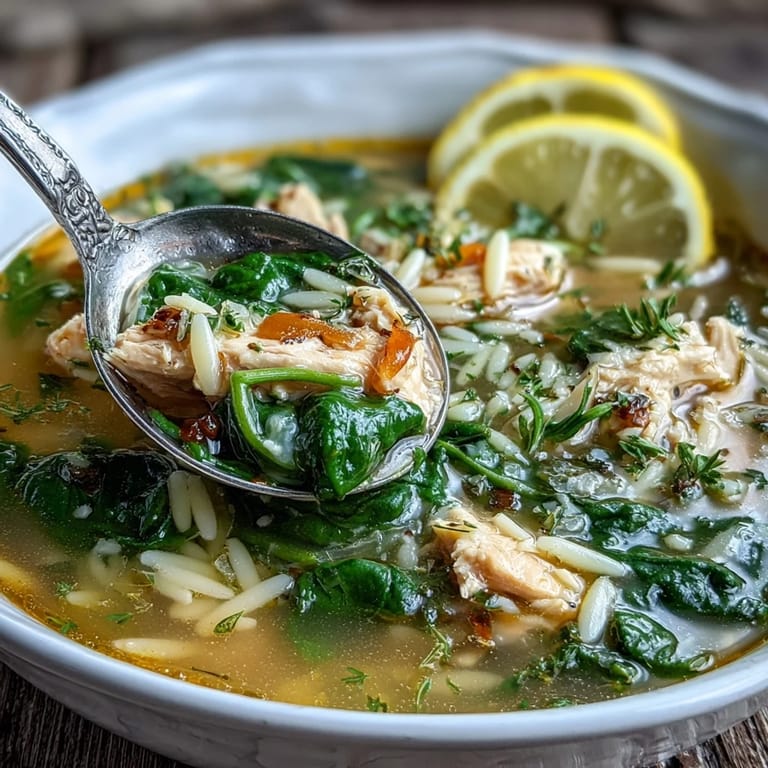
 There's something about the smell of lemon hitting hot broth that just stops you mid-thought. I discovered this soup on a gray afternoon when I had chicken breasts staring at me from the fridge and absolutely no inspiration—until I grabbed a lemon and suddenly everything clicked. The brightness cut through the gloom outside, and by the time the spinach wilted into those golden flecks, I knew I'd found something I'd make again and again.
I made this for my neighbor who'd been under the weather, and watching her face when that first spoonful hit—the way her eyes lit up at the brightness—made me realize food does something beyond filling a stomach. She texted me three days later asking if I could teach her, and now it's become our thing when one of us needs a quiet afternoon in the kitchen together.
Ingredients
- Boneless, skinless chicken breasts (2, about 400 g), diced: Cut them into bite-sized pieces so they cook evenly and disappear into spoonfuls without dominating the bowl.
- Yellow onion (1 medium), finely chopped: The base that makes everything taste intentional—don't skip the chopping step because texture matters here.
- Carrots (2 medium), peeled and sliced: They soften into sweetness and give the broth a gentle golden hue that feels homemade.
- Celery stalks (2), sliced: This is where the flavor foundation gets quietly complex, adding depth without announcing itself.
- Garlic cloves (3), minced: Mince them fine so they distribute through the oil and become almost invisible but absolutely necessary.
- Baby spinach (4 cups / 120 g), roughly chopped: Fresh spinach wilts down to nothing, so don't be shy with the volume—it's mostly air anyway.
- Orzo pasta (1 cup / 170 g): This small rice-shaped pasta absorbs broth like a sponge and gives you something to chew on without being too heavy.
- Low-sodium chicken broth (6 cups / 1.4 L): Use the good stuff if you can; it's the main character here, so don't bury its flavor under salt.
- Olive oil (2 tablespoons): Good olive oil makes a difference in how the aromatics smell when they first hit the heat.
- Lemon zest and juice (from 1 large lemon): The zest goes in at the end to stay bright, while the juice is your final seasoning—taste before committing.
- Dried oregano (1 teaspoon): This herb whispers Mediterranean without overpowering, which is exactly the vibe we're going for.
- Bay leaf (1): It flavors quietly in the background and must come out before serving—losing it in a spoonful is no fun.
- Salt and freshly ground black pepper, to taste: Season in layers as you go, tasting often, because salt at the end can't fix underseasoned broth from the beginning.
- Fresh dill or parsley, chopped (optional garnish): If you have it, a small handful on top adds a fresh finish that feels restaurant-quality.
- Lemon wedges (optional garnish): Let people squeeze their own if they want extra brightness—it's a small thing that makes them feel involved.
Tired of Takeout? 🥡
Get 10 meals you can make faster than delivery arrives. Seriously.
One email. No spam. Unsubscribe anytime.
Instructions
- Warm your oil and build the base:
- Pour olive oil into a large pot over medium heat and let it shimmer for a few seconds. Add your chopped onion, carrots, and celery all at once—you'll hear them sizzle and smell that savory start immediately. Let them soften for about 5 minutes, stirring now and then so nothing sticks or burns.
- Add garlic and wake everything up:
- Once the vegetables are soft, add your minced garlic and stir constantly for about a minute until the smell fills the kitchen. This is the moment where the foundation goes from good to great—don't rush it and don't let it brown.
- Brown the chicken gently:
- Drop in your diced chicken, sprinkle with salt and pepper, and let it cook for 3 to 4 minutes, stirring occasionally. You're not looking for golden perfection here, just enough color to know it's started cooking through.
- Build the broth and set the rhythm:
- Pour in your chicken broth, add the bay leaf and oregano, and turn the heat up until you see a rolling boil. Once it boils, reduce to a gentle simmer where you see occasional bubbles breaking the surface—this is where the magic happens slowly.
- Add orzo and cook until tender:
- Stir in your orzo and let it cook for 8 to 10 minutes, stirring occasionally so nothing clumps at the bottom. The pasta will absorb broth and soften, and the chicken will finish cooking through completely.
- Finish with brightness:
- Fish out the bay leaf with a spoon, then stir in your chopped spinach, lemon zest, and lemon juice all at once. Let it simmer for just 2 minutes so the spinach wilts but stays somewhat recognizable, then taste and adjust your seasoning—this is your last chance to make it exactly right.
- Serve and let people finish it their way:
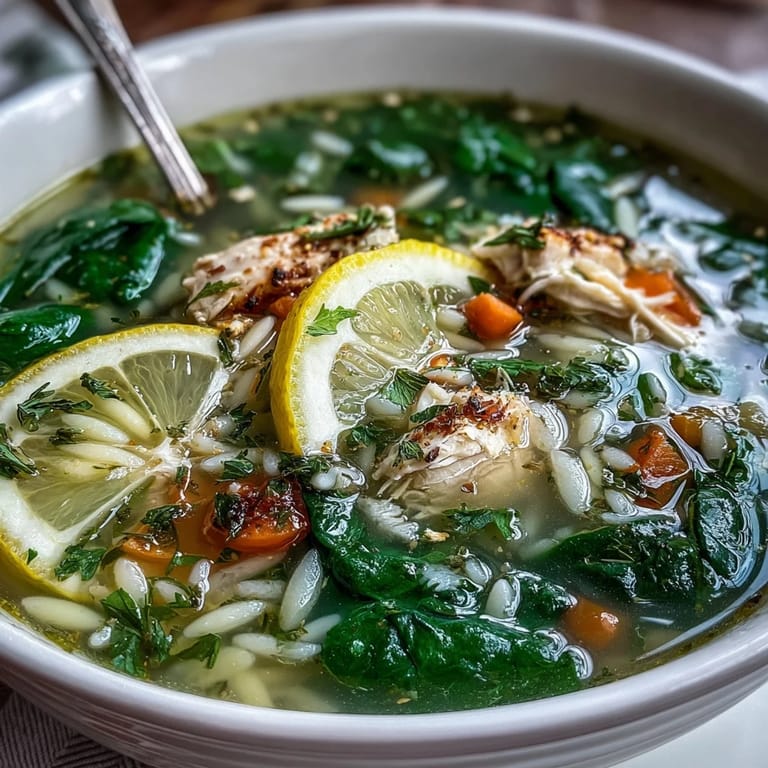
- Ladle into bowls, top with a small handful of fresh herbs if you have them, and set out lemon wedges so people can add more brightness if they want. Serve while it's still steaming so you get that warmth and the aromas rise to meet them.
 Pin It
 My son once asked why we couldn't just dump everything in at once, and I realized I'd never actually explained why cooking builds flavor in stages. We made it his way once to prove the point—and the soup tasted flat and wrong, like the ingredients were just sitting together instead of becoming something whole. Now he gets it.
Making It Your Own
This recipe is a frame, not a cage. If you find yourself with rotisserie chicken from the grocery store, shred it and add it in the last minute instead of cooking raw chicken—nobody will know and you'll save time. Orzo can swap for rice, ditalini, or even broken spaghetti if that's what lives in your pantry, and the soup adapts beautifully.
The Egg Yolk Secret
There's an optional step tucked in the original notes about whisking an egg yolk with hot broth—this is an ancient technique that makes the soup silkier without adding cream. If you want to try it, take a bowl, crack in one egg yolk, whisk it smooth, then slowly drizzle in a ladle of hot broth while whisking constantly so the yolk doesn't scramble. Once it's tempered, pour the whole mixture back into the pot off the heat and stir gently, and suddenly you've got something that feels luxurious without being heavy.
When to Drink This Soup
Winter is obvious—it's warm and filling when you need something solid. But I've also made it in summer after a long day, chilled it completely, and served it almost like a light salad in a bowl, and it was perfect in a different way. It pairs easily with crusty bread and a crisp white wine, though honestly it stands alone just fine.
- Serve it hot straight from the pot if you want maximum comfort and steam rising to your face.
- Chill it overnight and serve it cold on warm afternoons for something that feels Mediterranean and light.
- Make a double batch and freeze half in containers—it keeps for months and reheats without losing its character.
 Pin It
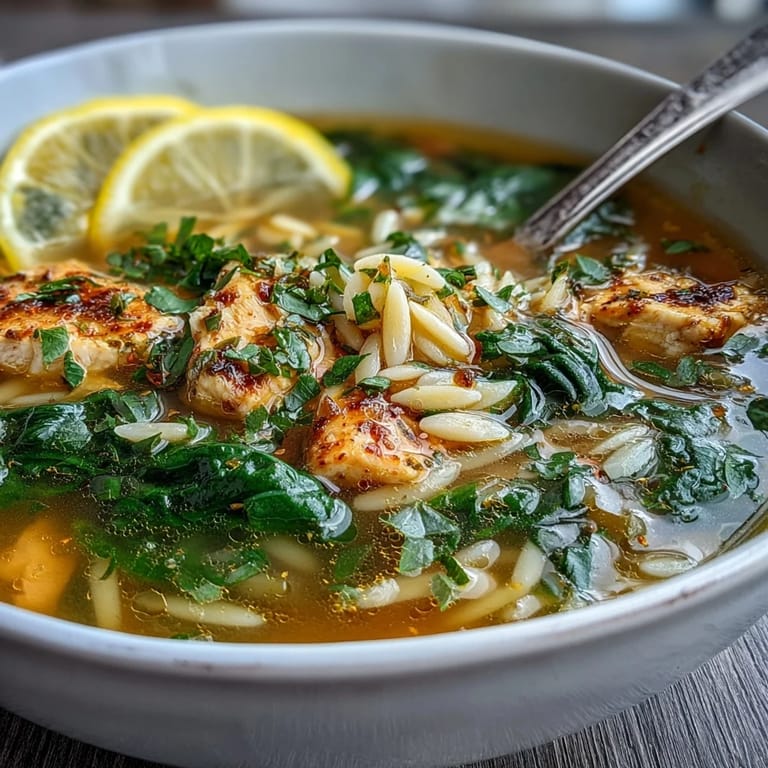
 This soup taught me that simple doesn't mean boring, and that sometimes the best meals are the ones you make when you're not trying too hard. It's honest food that tastes like you care, which is really all anyone wants to eat anyway.
Recipe FAQs
- → What type of pasta is used in this dish?
Delicate orzo pasta is used, providing a tender texture that complements the chicken and spinach.
- → Can I substitute the chicken with other proteins?
Yes, rotisserie chicken can be added for convenience or other poultry cuts depending on preference.
- → How should the lemon be prepared for best flavor?
Both the zest and juice of a large lemon are added to enhance the brightness and depth of flavor.
- → Is this dish suitable for a dairy-free diet?
Yes, this preparation contains no dairy ingredients, fitting well within a dairy-free diet.
- → What are recommended garnishes to enhance the dish?
Fresh dill or parsley and extra lemon wedges add a fresh, herbal brightness and visual appeal.
- → Can the orzo be replaced with other grains?
Orzo can be substituted with rice or small pasta shapes to vary texture or accommodate preferences.