 Pin It
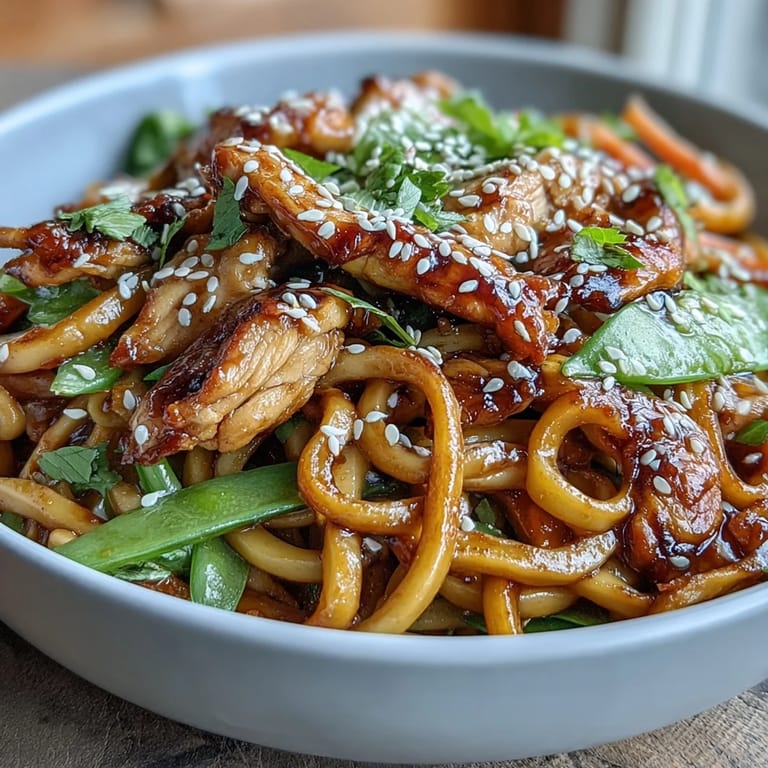
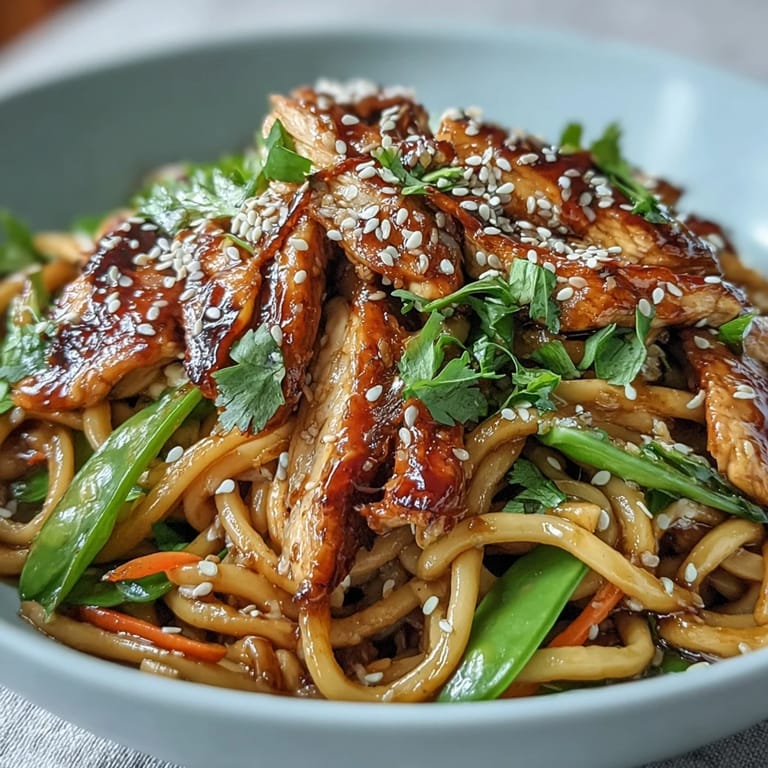
 There's something about the smell of sesame oil hitting a hot pan that makes me stop whatever I'm doing and just breathe it in. Years ago, I was watching my neighbor through her kitchen window as she made this exact bowl—the way the vegetables caught the light, how the chicken glistened with that glossy sauce. I finally asked her for the recipe, and what I got back was pure magic in a bowl. Now I make it when I need dinner to feel special but don't have time for the fuss.
I made this for my friend who was stressed about a work presentation, and watching her face light up when she took that first bite—the way her shoulders actually relaxed—that's when I knew this wasn't just a good recipe. It became our comfort bowl, the thing we'd make when we needed to reset.
Ingredients
- Boneless, skinless chicken breast or thighs (500 g): Thighs stay juicier if you're not careful with timing, but breasts are leaner; I slice everything thin so it cooks fast and absorbs that sauce like a dream.
- Dried udon, soba, or rice noodles (250 g): Use whatever you have, but udon gives you a lovely chew that holds the sauce better than delicate noodles.
- Red bell pepper (1, thinly sliced): The color matters here—it's not just pretty, it adds a subtle sweetness that balances the savory sauce.
- Medium carrot (1, julienned): Cut it thin enough that it stays crisp instead of going soft; this is where your knife skills make a real difference.
- Sugar snap peas (100 g, trimmed): These are your crunch—don't skip them or overcook them, that snap is essential to the whole experience.
- Spring onions (2, sliced): Add these at the very end so they stay bright and aromatic instead of turning mushy.
- Low-sodium soy sauce (60 ml): The backbone of your sauce; I learned the hard way that regular soy can oversalt everything, so low-sodium lets you taste the ginger and garlic.
- Brown sugar (2 tbsp): This creates that glossy, slightly sweet depth—white sugar doesn't give you the same richness.
- Toasted sesame oil (1 tbsp): This is not cooking oil, it's a finisher; using it raw in the sauce means the flavor stays bright and nutty.
- Rice vinegar (1 tbsp): The acid keeps everything from tasting one-note and heavy.
- Fresh ginger, grated (2 tsp): Grate it yourself if you can—the spice releases right there in your bowl and tastes completely different from pre-minced.
- Garlic cloves, minced (2): Fresh garlic dissolves into the sauce and becomes almost sweet when it cooks.
- Cornstarch (1 tsp, optional): Use this if you like a thick, glossy sauce that clings to everything; skip it for something looser and brothier.
- Toasted sesame seeds (2 tbsp): Toast them yourself if they're not already toasted—it wakes up their flavor completely.
- Fresh coriander or cilantro, chopped: The herb is your last-minute brightness; it makes everything taste fresher than it did five minutes before.
- Lime wedges (optional): A squeeze of lime at the table is the move—it's subtle but it lifts everything.
Tired of Takeout? 🥡
Get 10 meals you can make faster than delivery arrives. Seriously.
One email. No spam. Unsubscribe anytime.
Instructions
- Cook Your Noodles:
- Bring a large pot of water to a rolling boil and add your noodles, stirring occasionally so they don't stick together. Once they're tender, drain them and rinse under cold water until they're completely cool—this stops them from clumping and keeps them from getting mushy when you add them to the hot pan later.
- Build Your Sauce:
- In a small bowl, whisk together the soy sauce, brown sugar, sesame oil, rice vinegar, ginger, and garlic until the sugar dissolves and everything looks glossy. If you're using cornstarch, mix it in here so there are no lumps when it hits the hot pan.
- Heat Your Pan:
- Get a large skillet or wok over medium-high heat until it's hot enough that a drop of water sizzles immediately. Add just a splash of neutral oil—you want the surface shimmering but not smoking.
- Cook the Chicken:
- Once your oil is hot, add the sliced chicken in a single layer and let it sit without moving for about 2 minutes so it develops a golden edge. Then toss it around until it's cooked through and no longer pink inside, which usually takes another 2-3 minutes total.
- Stir-Fry the Vegetables:
- Push the cooked chicken to the side of the pan, add a tiny bit more oil if the pan looks dry, and add your bell pepper, carrot, and snap peas all at once. Keep them moving constantly so they stay crisp and bright—you want them tender enough to bite through easily but still with a little resistance.
- Bring It All Together:
- Return the chicken to the center, pour that beautiful sauce over everything, and toss constantly until the sauce coats every piece and gets glossy and thick. This takes about 1-2 minutes; you'll see it happen in real time.
- Add the Noodles:
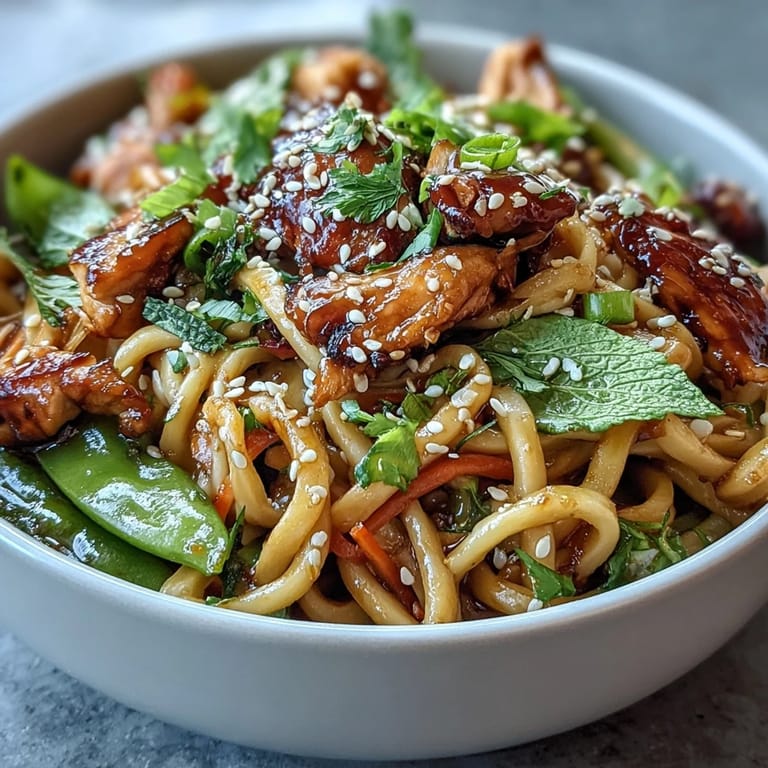
- Toss in your cooked noodles and the sliced spring onions, and keep tossing until every strand is coated in sauce and everything is heated through. The whole pan should look shiny and smell absolutely incredible.
- Serve and Garnish:
- Divide everything among bowls while it's still hot, then scatter sesame seeds and fresh cilantro over the top and serve with lime wedges on the side. Let people squeeze lime over their own bowl—it's the perfect finishing touch.
 Pin It
 My mom tried this once and asked why I'd never made it for her before, and I realized I'd been holding this little treasure to myself like a secret. Now it's her go-to when she needs to impress someone without spending hours in the kitchen.
The Sauce Is Everything
I once made this bowl with regular soy sauce instead of low-sodium, and it was almost inedible—too salty to taste anything else. That taught me that soy sauce varies wildly, so now I always taste it first. The sweet and savory balance in this sauce is what makes it memorable; if your soy is already intense, the whole thing gets thrown off balance.
Variations That Actually Work
I've swapped the chicken for crispy tofu more times than I've made it with chicken, honestly—the tofu soaks up that sauce like nothing else and gets this incredible texture when you let it sit in the hot pan for a minute. You can also throw in broccoli, mushrooms, bok choy, or literally any vegetable you have hanging around in your fridge; the sauce is flexible enough to carry whatever you add. My sister makes a version with shrimp and it's somehow even better than the chicken version, though I'll never admit that to her face.
Why This Comes Together So Quickly
The magic here is that everything cooks in one pan after your prep work is done, and your prep work takes maybe 10 minutes if you're leisurely about it. Once you start cooking, it's 15 minutes from stovetop to table, which means you can make this on a Tuesday night without it feeling like a project.
- Slice your chicken thin so it cooks through in minutes instead of sitting in the pan getting tough.
- Have everything chopped and the sauce mixed before you turn on the heat—it eliminates any scrambling and keeps the rhythm smooth.
- Use a wok or large skillet instead of a small pan; it gives you room to move everything around without crowding it.
 Pin It
 This bowl has become the dish I make when I want to feel like I've done something right, even on nights when I'm tired and hungry and short on time. It's proof that simple ingredients and a little care can turn into something that tastes like you've been cooking all day.
Recipe FAQs
- → What type of noodles work best?
Udon, soba, or rice noodles all work beautifully. Udon offers a chewy texture, soba adds a nutty flavor, and rice noodles keep it light. Choose based on preference or what you have available.
- → Can I make this vegetarian?
Absolutely. Substitute the chicken with firm tofu, pressed and cubed. Add the tofu during step 5 and cook until golden before tossing with the sauce.
- → How do I store leftovers?
Store in an airtight container in the refrigerator for up to 3 days. The noodles will absorb sauce, so add a splash of water or soy sauce when reheating.
- → Can I adjust the sweetness?
Yes. Reduce the brown sugar for a more savory profile or increase it for a sweeter glaze. You can also add chili flakes for heat or extra ginger for brightness.
- → What other vegetables can I add?
Broccoli florets, sliced mushrooms, baby corn, or bok choy all complement the flavors. Add hardier vegetables like broccoli first, then quick-cooking veggies like snap peas.
- → Is this gluten-free friendly?
It can be. Use tamari instead of soy sauce and choose gluten-free rice noodles. Always check labels on condiments to ensure they meet your dietary needs.