 Pin It
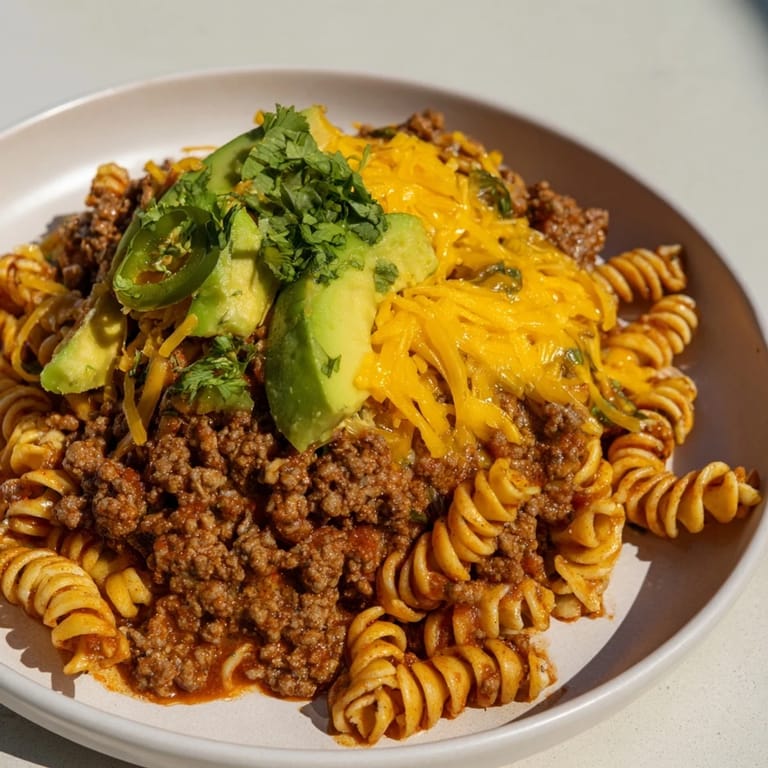
 One Tuesday night, my kitchen smelled like a taco truck had parked itself at my stove—ground beef sizzling, onions softening, that unmistakable taco seasoning doing its magic. My kid had asked for tacos, but I was tired of standing at the assembly line. So I threw everything into one skillet with pasta, and fifteen minutes later, we had something that tasted even better than the original plan. That's when this dish became our shortcut to weeknight happiness.
I remember serving this to my neighbor who'd just moved in, and she asked for the recipe before she'd finished her first bite. That moment taught me that the best meals aren't complicated—they're the ones that make people want to come back for more. Now whenever I make it, I think about how food brings people closer than fancy cooking ever could.
Ingredients
- Ground beef (1 lb, 85% lean): Leaner meat prevents a greasy skillet, and it's sturdy enough to brown properly without falling apart into dust.
- Yellow onion and garlic (1 small onion, 2 cloves): These two are the flavor foundation—they soften and sweet as the beef cooks, building a base that makes everything taste intentional.
- Taco seasoning (1 packet or homemade): Store-bought works fine, but I started making my own to avoid weird additives, and honestly, it tasted better that way.
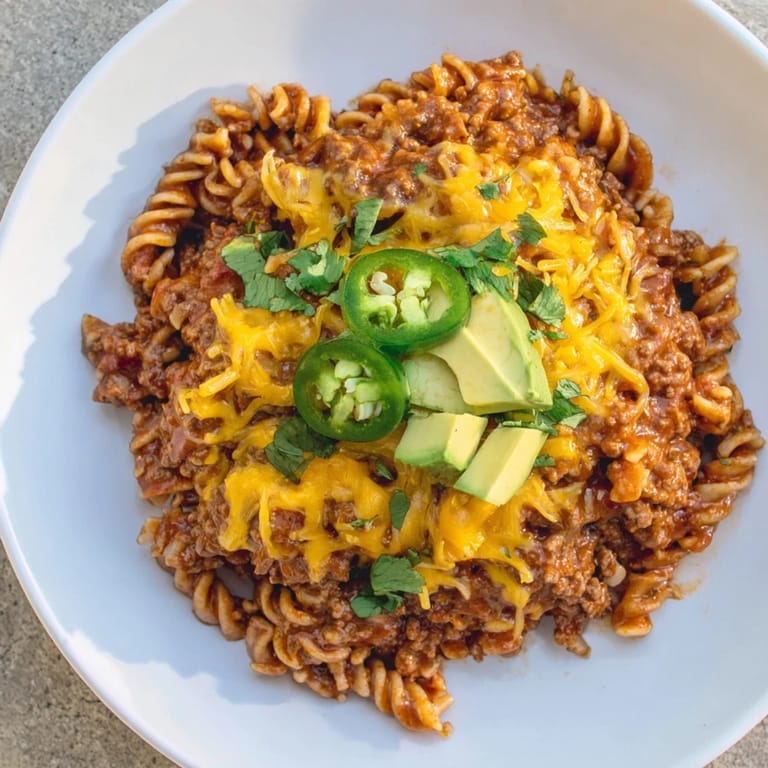
- Short pasta (8 oz): Rotini, penne, or shells all work because they catch the broth and spices in every curve.
- Beef broth and canned diced tomatoes (2 cups + 1 can): Together they become the cooking liquid that flavors the pasta right in the pan—no draining, no extra pots.
- Cheddar cheese (1½ cups shredded): This melts into the hot pasta beautifully and adds richness that ties everything together.
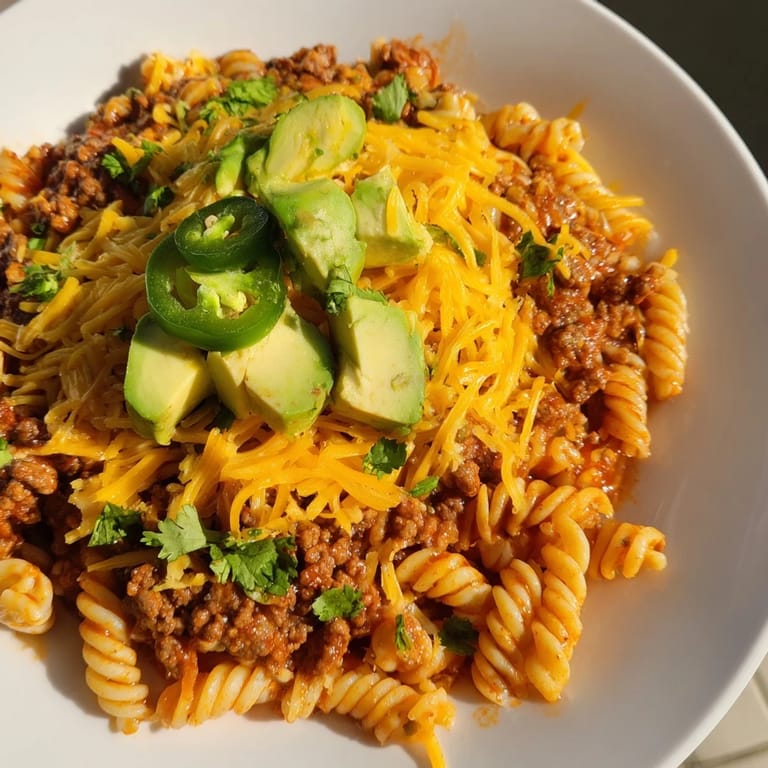
- Sour cream, cilantro, jalapeño, avocado (optional garnishes): These are the finishing touches that let people customize their bowl and make it feel restaurant-quality.
Tired of Takeout? 🥡
Get 10 meals you can make faster than delivery arrives. Seriously.
One email. No spam. Unsubscribe anytime.
Instructions
- Brown the beef:
- Heat your skillet over medium-high heat and add the ground beef, breaking it up as it cooks. You'll hear the sizzle, smell that savory beef aroma, and after about 5–6 minutes it should look deeply brown with no pink hiding underneath. Drain off any excess fat if there's more than a thin layer.
- Build the flavor base:
- Toss in the chopped onion and let it sit for a minute before stirring—it'll soften in 2–3 minutes and turn slightly translucent. Add the garlic and stir constantly for just 1 minute so it perfumes the whole pan without burning.
- Season everything:
- Sprinkle the taco seasoning, salt, and pepper evenly over the beef and onions. Stir it all together so every piece gets coated and the spices release their flavor into the meat.
- Add pasta and liquid:
- Pour in the uncooked pasta, beef broth, and tomatoes with all their juice. Stir everything together until the pasta is submerged and it all looks combined, then let it come to a boil—you'll see the liquid bubbling around the edges.
- Simmer until pasta is tender:
- Reduce the heat to medium-low, cover the skillet, and let it bubble gently for 12–15 minutes, stirring every few minutes so nothing sticks to the bottom. The pasta will absorb the broth and become tender, and the sauce will thicken as the liquid reduces.
- Melt the cheese:
- Pull the skillet off the heat and sprinkle the shredded cheddar evenly across the top. Cover it again and let it sit for 2–3 minutes—the residual heat will melt the cheese into creamy ribbons throughout the dish.
 Pin It
 There was one night when my partner came home frustrated from work and before he could even take his coat off, the smell of this dish hit him and everything softened. He sat down, took one bite, and just exhaled like the day had finally left his shoulders. That's when I realized this skillet meal wasn't just food—it was a small kindness I could offer with my hands.
Why This Skillet Method Changes Everything
Cooking pasta in broth instead of water means it's flavored from the inside out, not just on the surface. The starch from the pasta thickens the broth into a light sauce that coats every piece, so you don't need a separate pot or fancy technique. It's the kind of efficient cooking that actually tastes intentional, not rushed.
Make It Your Own
Ground turkey or chicken work beautifully if you want something leaner, and the seasoning will still carry everything the same way. Monterey Jack cheese melts even smoother than cheddar if you can find it, and Mexican cheese blends add a complexity that's really nice. I've even thrown in black beans or corn when I had them, and the dish just absorbed whatever I gave it.
Storing and Reheating
Leftovers keep in the fridge for up to 3 days, and they honestly taste even better the next day when the flavors have time to meld together. Reheat gently on the stovetop with a splash of broth to loosen it up again, or cover it loosely in the microwave so the cheese doesn't get tough.
- Colder pasta than you expected is a sign you need more heat or a bit more broth when reheating.
- If you're meal prepping, wait to add the sour cream and fresh garnishes until you're ready to eat so they stay fresh.
- A sprinkle of fresh cilantro right before serving makes yesterday's dinner taste like tonight's intention.
 Pin It
 This dish exists in that perfect space between weeknight emergency and something you'd actually be proud to serve. It asks for twenty minutes and your presence, and it gives back comfort that stays with you longer than the meal itself.
Recipe FAQs
- → Can I substitute the ground beef?
Yes, ground turkey or chicken can be used for a lighter alternative without sacrificing flavor.
- → What type of pasta works best?
Short pasta shapes such as rotini, penne, or shells hold sauces well and cook evenly in the skillet.
- → How can I make this spicier?
Add cayenne pepper or chopped fresh chili peppers along with the onions to increase heat.
- → Can I use a different cheese?
Monterey Jack or a Mexican cheese blend works beautifully in place of cheddar for a different flavor profile.
- → How should leftovers be stored?
Store in an airtight container in the refrigerator for up to 3 days, then reheat gently to preserve texture.