 Pin It
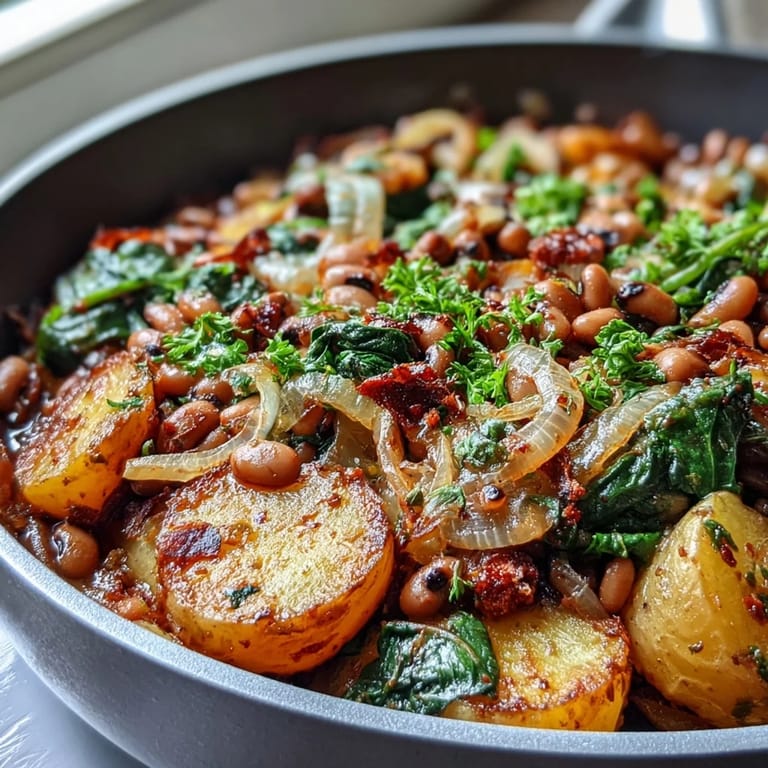
 There's something magical about the way a cast iron skillet can transform simple ingredients into something that feels both comforting and alive on the plate. I discovered this particular combination on a chilly evening when I had a can of black-eyed peas staring at me from the pantry and a handful of potatoes that needed rescuing. What started as a quiet experiment became a weeknight staple that my roommate now requests by name, and honestly, I've stopped trying to recreate it any other way—the skillet is non-negotiable.
I made this for a group of friends during a potluck where I was supposed to contribute something impressive, and I almost didn't bring it because it seemed too simple. But something about the way the kitchen filled with that toasted-garlic-and-paprika smell convinced me to take the risk, and three people asked for the recipe before dessert was even served. One friend swore it tasted like home cooking from somewhere she'd never actually lived, and that stuck with me.
Ingredients
- Olive oil: Two tablespoons is just enough to coat the skillet without making it feel heavy, and it lets the onions caramelize properly without frying.
- Yellow onion: Slice it thin—it practically melts into everything else and adds a subtle sweetness that holds the whole dish together.
- Yukon Gold potatoes: These waxy potatoes hold their shape instead of turning to mush, and their natural butter flavor pairs beautifully with the spices.
- Fresh spinach: Buy the loose kind if you can; it wilts down to almost nothing, and you'll want that green color and mineral taste at the end.
- Black-eyed peas: Canned is absolutely fine—drain and rinse them well to avoid that metallic aftertaste that canned beans sometimes carry.
- Garlic: Three cloves minced fine, because garlic is one of those things that gets better the smaller you cut it.
- Smoked paprika: This is the secret note that makes people lean in and ask what's different about this version—don't skip it or substitute regular paprika.
- Dried thyme: Half a teaspoon is enough to whisper herbal complexity without overpowering the earthy legumes.
- Red pepper flakes: Optional, but I've learned that a quarter teaspoon adds sophistication rather than heat if you use it sparingly.
- Vegetable broth: Low-sodium matters because you're seasoning as you go, and you need control over the salt level.
- Fresh parsley: A small handful chopped fine at the very end brightens everything and makes the dish look intentional.
Tired of Takeout? 🥡
Get 10 meals you can make faster than delivery arrives. Seriously.
One email. No spam. Unsubscribe anytime.
Instructions
- Get your skillet ready:
- Heat the olive oil in a large cast iron skillet over medium heat for about a minute—you'll know it's right when a drop of water sizzles gently on contact. Don't rush this step; the pan temperature makes the difference between sautéed and steamed.
- Build flavor with the onions:
- Add the sliced onion and let it sit undisturbed for a minute or two before stirring, then sauté for three to four minutes until it turns translucent and starts smelling sweet. This is when you know the skillet temperature is exactly right.
- Add the potatoes and let them golden:
- Stir in the diced potatoes and cook for ten to twelve minutes, stirring occasionally, until they develop golden edges and the centers are just tender when you poke them with a fork. The occasional stir prevents sticking without breaking them apart.
- Wake up the spices:
- Add the minced garlic, smoked paprika, thyme, and red pepper flakes, then cook for just about a minute—you want the kitchen to smell like something special happened, not burnt. This brief cooking blooms the spices' flavor without darkening them.
- Bring everything together:
- Pour in the vegetable broth and add the black-eyed peas, stirring well so the spices coat everything evenly. Cover the skillet and let it simmer gently for eight to ten minutes until the potatoes are completely tender and most of the liquid has been absorbed.
- Finish with greens:
- Uncover the skillet, add the chopped spinach, and stir constantly for two to three minutes while it wilts down and becomes part of the dish rather than something sitting on top. The residual heat does most of the work here.
- Season and serve:
- Taste everything, then adjust salt and pepper until it feels balanced—you want savory, not salty. Top with fresh parsley and serve hot with lemon wedges if you like that brightness.
 Pin It
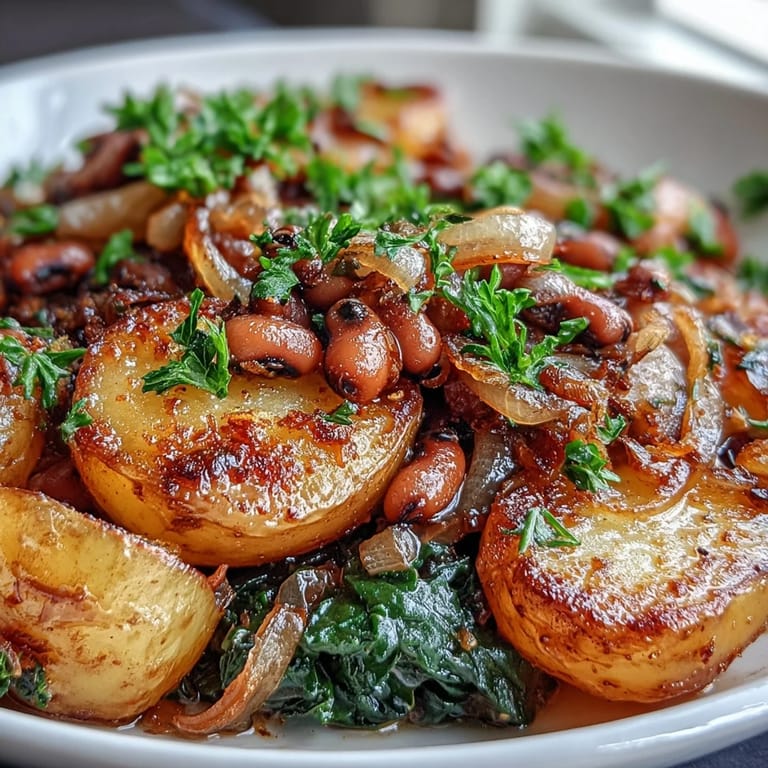
 There was a morning when my neighbor smelled this cooking and knocked on my door to ask what was happening in my kitchen—it turned into the kind of unexpected conversation where she told me stories about her grandmother's cast iron skillet and Sunday dinners, and I learned that sometimes the best moments around food happen when you're not trying too hard. That dish became a bridge between strangers, which feels like the highest compliment a simple one-pan meal can receive.
Why Cast Iron Makes a Difference
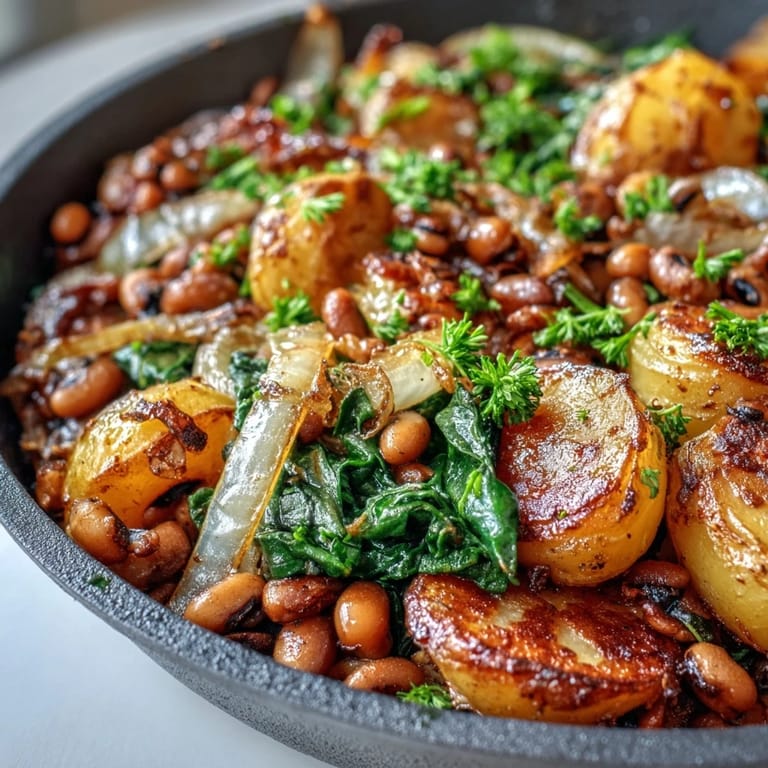
The moment I started using a cast iron skillet instead of my regular stainless steel pan, everything changed about how this dish tasted and felt. Cast iron holds heat more consistently, which means your potatoes brown instead of steam, and there's something about the way it distributes warmth that makes the spices taste deeper and more integrated into the whole dish.
Variations That Work Beautifully
This recipe is flexible enough to bend with whatever you have or whatever you're in the mood for, but it's structured enough that it never falls apart. Kale instead of spinach adds an earthy chew, tempeh adds protein and texture if you want more substance, and a squeeze of fresh lemon at the end can brighten everything if you're feeling like it needs one more thing.
Serving and Storage Wisdom
This dish tastes almost better the next day when everything has time to get to know each other, so don't hesitate to make it ahead and reheat gently in that same cast iron skillet. It keeps well in the refrigerator for up to four days, and honestly, a bowl of this with cornbread and a cup of strong coffee can save almost any kind of morning.
- Serve it with cornbread, rice, or warm crusty bread to soak up any remaining savory broth.
- A squeeze of fresh lemon right before eating adds brightness and cuts through the richness beautifully.
- Leftovers taste even better the second day when the flavors have melded together overnight.
 Pin It
 This skillet has become the kind of meal I turn to when I want to cook something real without making a production out of it. Every time I make it, I feel a little less like I'm following instructions and a little more like I'm doing something I've always known how to do.
Recipe FAQs
- → Can I use dried black-eyed peas instead of canned?
Yes, you can use dried peas. Soak them overnight, then cook until tender before adding to the skillet. This will extend the total preparation time significantly.
- → What other greens work well in this dish?
Kale, Swiss chard, or collard greens make excellent substitutes for spinach. Just adjust cooking time slightly—heartier greens like kale may need an extra minute or two to wilt completely.
- → How long do leftovers keep?
Store in an airtight container in the refrigerator for up to 4 days. Reheat gently in a skillet over medium-low heat, adding a splash of water or broth if needed to prevent sticking.
- → Can I make this dish spicier?
Absolutely. Increase the red pepper flakes to ½ teaspoon, add a diced jalapeño with the onions, or incorporate a splash of hot sauce at the end for extra heat.
- → What sides pair well with this skillet dinner?
Cornbread, crusty bread, or cooked rice complement this dish beautifully. For a lighter meal, serve with a simple green salad dressed with vinaigrette.
- → Is this suitable for meal prep?
Yes, this dish reheats beautifully and actually develops more flavor after sitting. Portion into containers for easy grab-and-go lunches throughout the week.