 Pin It
 I discovered this dessert quite by accident while reorganizing my kitchen on a rainy afternoon. My daughter had arranged her toy blocks in a checkerboard pattern on the floor, and I thought, why not create something edible with that same playful logic? The idea of four distinctly different textures and flavors all in one bite felt like pure possibility. That evening, I started experimenting with layers, and the Checkerboard Terrace was born.
The first time I made this for guests, I was anxious about whether the textures would hold during plating. My friend Sarah watched me slice through the chilled terrace with a sharp knife, and when that perfect grid emerged intact, she actually gasped. That moment made it clear this wasn't just a dessert—it was a conversation starter. Now, whenever someone brings it to a gathering, people spend more time examining it than they do eating it.
Ingredients
- Crisp shortbread cookies or graham crackers, crushed (80 g): These create the structural base and one of your four textures; the butter helps them hold together while maintaining that satisfying crunch.
- Unsalted butter, melted (30 g): The binder that transforms crumbs into a cohesive layer you can actually slice cleanly.
- Cream cheese, softened (80 g): Your soft, luxurious layer that contrasts beautifully with everything else; softening it first prevents lumps.
- Powdered sugar (30 g): Sweetens the cream cheese layer without adding grittiness like granulated sugar would.
- Vanilla extract (1 tsp): A small but crucial flavor note that ties the soft layer together.
- Dark chocolate, chopped (100 g): Choose quality chocolate because this ganache is simple and lets the chocolate shine; chopping it finely helps it melt evenly.
- Heavy cream (60 ml): Creates silky ganache and one of your four distinct flavors; don't skimp on quality here.
- Salted caramel sauce (80 g): Your salty-sweet layer; homemade tastes better but store-bought saves time.
- Flaky sea salt, for garnish: This tiny finishing touch amplifies the salty squares and adds visual texture.
- Fresh raspberries, optional (16 small): They crown the crunchy squares and add brightness if you want it.
Tired of Takeout? 🥡
Get 10 meals you can make faster than delivery arrives. Seriously.
One email. No spam. Unsubscribe anytime.
Instructions
- Crush and bind your base:
- Mix your crushed cookies with melted butter until the texture reminds you of wet sand, then press it firmly and evenly into a parchment-lined square pan. The more uniform this layer, the easier your final slicing will be.
- Chill while you prepare the fillings:
- Fifteen minutes in the fridge sets this base so it won't crumble when you add the other layers. Use this time to gather your other ingredients.
- Whip the cream cheese mixture:
- Beat softened cream cheese with powdered sugar and vanilla until completely smooth and slightly fluffy. If it looks grainy, your cream cheese wasn't soft enough; let it sit at room temperature longer next time.
- Create silky chocolate ganache:
- Heat cream until just steaming, pour it over chopped chocolate, wait two minutes, then stir gently until glossy and smooth. This brief pause lets the heat do the work.
- Mark your grid carefully:
- Remove the chilled base and use a ruler and sharp knife to lightly score the surface into sixteen equal squares. Light pressure here prevents cracking your base.
- Fill each square systematically:
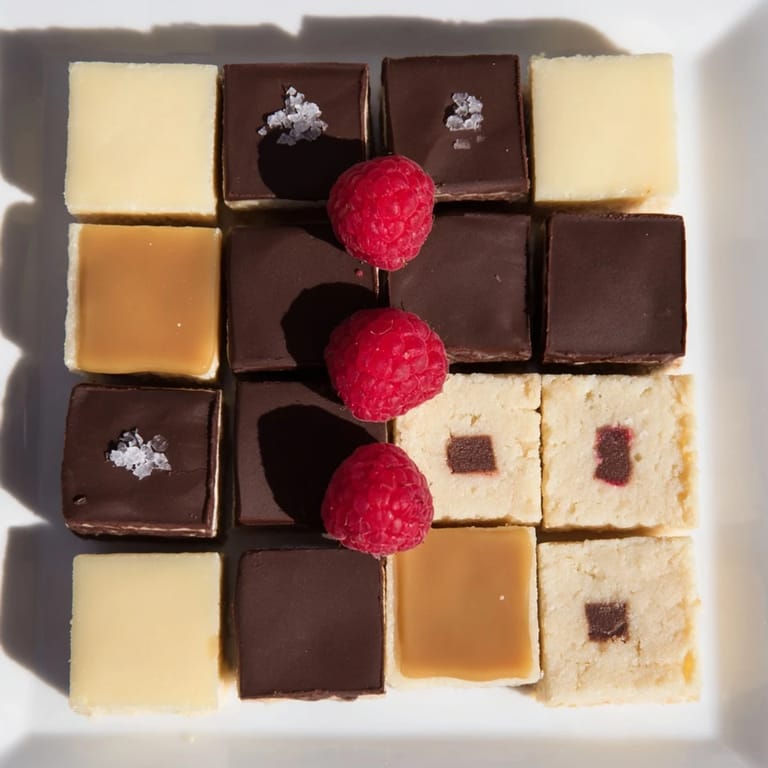
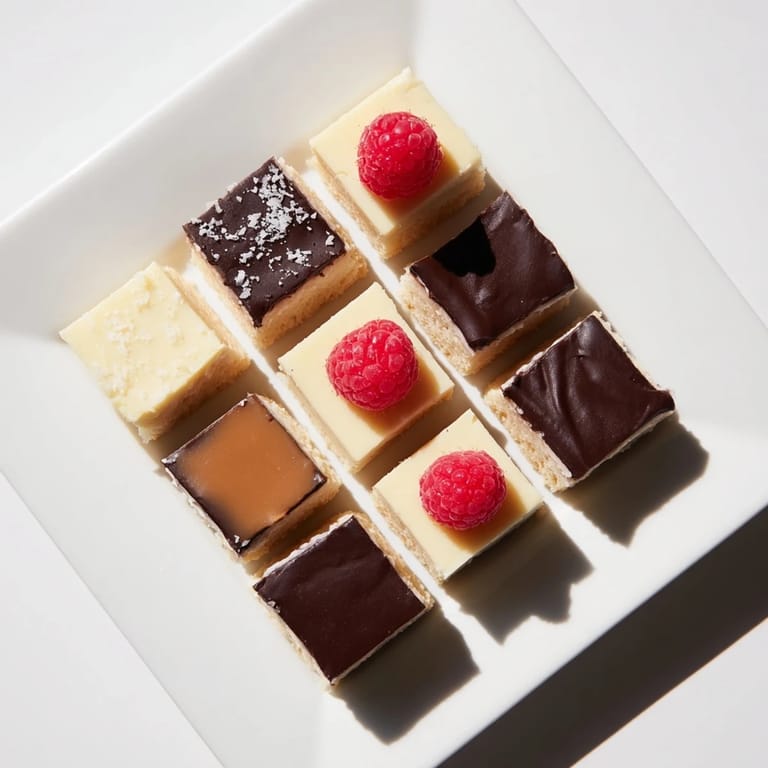
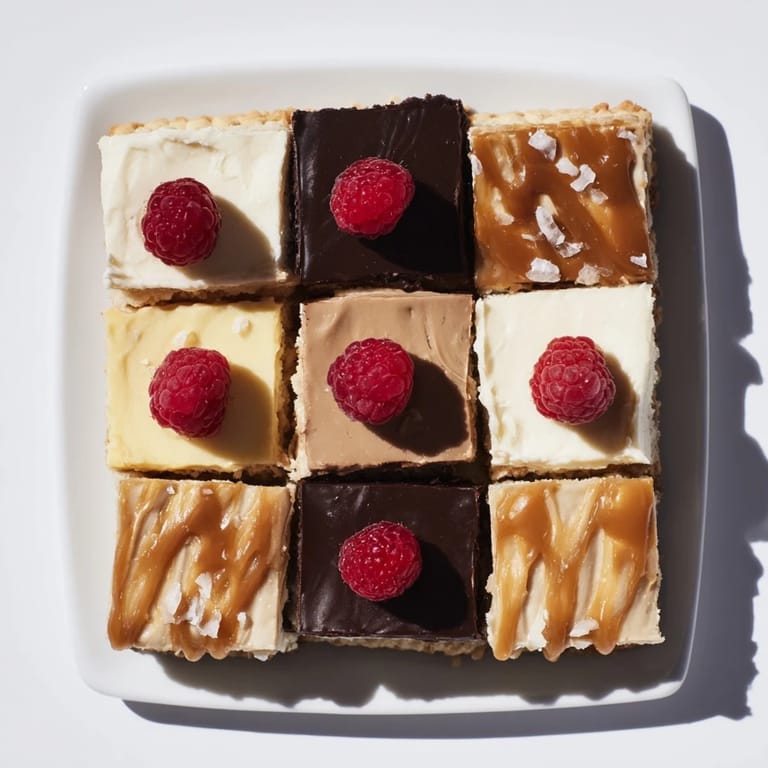
- Apply cream cheese to four corners, chocolate ganache to four adjacent squares, caramel to four more, and leave the final four bare or topped with raspberries. Think checkerboard—no two of the same texture should touch.
- Set everything together:
- Chill the assembled terrace for half an hour so all layers firm up and the flavors meld slightly.
- Slice with precision:
- Use a sharp, clean knife and cut along your scored grid lines with gentle downward pressure rather than sawing. Wiping the blade between cuts keeps everything looking neat.
 Pin It
 One winter, I made this for my mother's birthday, and she spent the entire evening telling guests about how thoughtfully engineered it was. That word—engineered—stuck with me, because there's something beautiful about dessert that's both playful and deliberately constructed. It transformed how I thought about the relationship between form and flavor.
Why Texture Matters in Dessert
Most desserts focus on a single dominant texture—fudgy, fluffy, chewy. This one celebrates contrast instead. The crunchy base gives way to creamy filling, which breaks into smooth chocolate, which balances against caramel and salt. Your mouth expects one thing and gets four, and that surprise is what makes it memorable. Every bite is slightly different depending on how much of each layer you catch, which is why people find themselves eating more slowly, paying attention.
Timing and Temperature Control
Temperature is your hidden ingredient here. The crunchy base needs to stay firm enough to hold together when you apply softer toppings, which is why chilling matters. The ganache needs to cool slightly before spreading, or it'll melt into the cream cheese layer. The salted caramel works best when it's just slightly firm but still spreadable. Learning to feel these small temperature shifts takes a few attempts, but once you do, the assembly becomes almost meditative.
Variations and Personal Touches
I've made versions with crushed pistachios replacing half the cookies, adding toasted hazelnut to the mix, or using mascarpone instead of cream cheese for a richer soft layer. A friend added lemon zest to her cream cheese mixture and suddenly it felt entirely new. The beauty of this structure is that the four-square framework gives you freedom to experiment within it. You could use white chocolate ganache, dulce de leche instead of caramel, or even a fruit curd layer if you wanted brightness instead of sweetness.
- Try swapping the cookies for crushed nuts, pretzels, or even brownie crumbs for a different crunchy base.
- Add citrus zest, almond extract, or mint to your cream cheese layer to shift the whole flavor profile.
- Remember that this structure is a canvas—trust your instincts about what textures and flavors should go where.
 Pin It
 This dessert works because it respects that eating is multisensory. It's a small act of generosity wrapped in geometry and thoughtfulness.
Recipe FAQs
- → What ingredients create the crunchy base?
The crunchy base combines crushed shortbread cookies or graham crackers mixed with melted unsalted butter, pressed firmly and chilled.
- → How is the soft layer prepared?
The soft layer is a smooth blend of cream cheese, powdered sugar, and vanilla extract, beaten together until creamy.
- → What makes the sweet layer unique?
The sweet layer features a silky chocolate ganache made by pouring heated heavy cream over chopped dark chocolate and stirring until glossy.
- → How is the salty layer finished?
The salty layer uses salted caramel sauce topped with flaky sea salt to balance the sweetness and add texture contrast.
- → What is the best way to assemble the checkerboard pattern?
Lightly mark a 4x4 grid on the chilled base, then alternate the soft, sweet, salty, and crunchy layers so no adjacent squares share the same texture.
- → Can this dessert be customized?
Yes, you can substitute half the base with toasted nuts, use mascarpone cheese for richness, add citrus zest, or swap white chocolate for variation.