 Pin It
 There's a moment in early winter when I'm standing in my kitchen, staring at a half-loaf of sourdough that's gone a bit too hard, and I'm struck by how wasteful it feels to toss it. That night, inspired by a craving for garlic bread and the comfort of soup, I crumble that old bread into a pot with butter, garlic, and cream. What emerges is nothing short of magic—a silky, luxurious soup that tastes like garlic bread transformed into liquid comfort. Now, whenever I have stale bread, I don't think twice before making this.
I made this soup for my sister during one of those unexpected visits where the fridge is almost empty but the pantry holds promise. She walked in hungry and skeptical, and twenty minutes later she was tearing off pieces of fresh bread to dunk into her bowl like she was five years old again. That's when I knew this wasn't just a way to use up stale bread—it was a keeper.
Ingredients
- Day-old rustic bread (about 4 cups, cubed): Sourdough or country loaf works beautifully because the texture holds up and doesn't turn to mush too quickly; stale bread is actually ideal here since it won't disintegrate the moment it hits the broth.
- Unsalted butter (2 tbsp): This builds the foundation of richness that makes the finished soup feel indulgent without the cream doing all the work.
- Olive oil (2 tbsp): Carries the garlic and aromatics into every corner of the pot, and prevents the butter from burning while you develop those flavors.
- Yellow onion (1 medium, finely chopped): The onion becomes sweet and mellow as it softens, adding depth that keeps the soup from tasting one-dimensional.
- Garlic cloves (6 large, minced): This is the star, so don't skimp and definitely don't use jarred; the mincing releases oils that perfume the entire kitchen.
- Celery (1 stalk, finely chopped): A subtle addition that adds an earthiness many people taste but can't quite name, which makes this soup taste somehow more sophisticated.
- Fresh thyme (1 sprig) or dried (1/2 tsp): Thyme whispers to the garlic rather than shouting over it, keeping the flavor balanced and warm.
- Fresh parsley (2 tbsp chopped): Save this for garnish mostly; it catches the light on top and reminds you this started as fresh ingredients.
- Vegetable broth (4 cups): A good quality broth makes the difference between soup that tastes homemade and soup that tastes like a can; if yours is salty, go light on seasoning later.
- Heavy cream (1 cup): This is what turns toasted bread into silk; don't skip it or substitute with milk, which will split and curdle.
- Parmesan cheese (1 cup grated): Both stirred in and sprinkled on top, it adds a salty, umami depth that somehow makes the garlic taste more like itself.
- Salt and black pepper: Season in stages—once before cooking the onions, and again at the end when you can taste the whole picture.
Tired of Takeout? 🥡
Get 10 meals you can make faster than delivery arrives. Seriously.
One email. No spam. Unsubscribe anytime.
Instructions
- Build the base:
- Heat olive oil and butter in your pot over medium until they're foaming together, then add onion, celery, and a small pinch of salt. Let them soften and turn translucent—this takes about five minutes and sets the whole tone of the soup.
- Awaken the garlic:
- Stir in the minced garlic and thyme, keeping the heat at medium and stirring constantly for two minutes until your entire kitchen smells like a garlic lover's dream. This is where you coax out the sweetness and prevent any bitter burn.
- Toast the bread:
- Add all your bread cubes and stir them until they're coated with the butter, oil, and aromatics. Let them sit for three to four minutes, stirring occasionally, until they turn golden and absorb all those flavors you've been building.
- Simmer into softness:
- Pour in the broth and bring to a boil, then turn the heat down to a gentle simmer and cover. After fifteen minutes of occasional stirring, the bread will have surrendered completely and softened into the broth.
- Blend to silk:
- Fish out the thyme sprig, then use your immersion blender to puree everything until completely smooth. If you're using a countertop blender, work in batches and be careful with the heat.
- Finish with cream:
- Stir in the heavy cream and Parmesan cheese, then simmer gently for another three to four minutes without letting it boil hard. Taste and adjust your salt and pepper now when you can really evaluate the final flavor.
- Serve with theater:
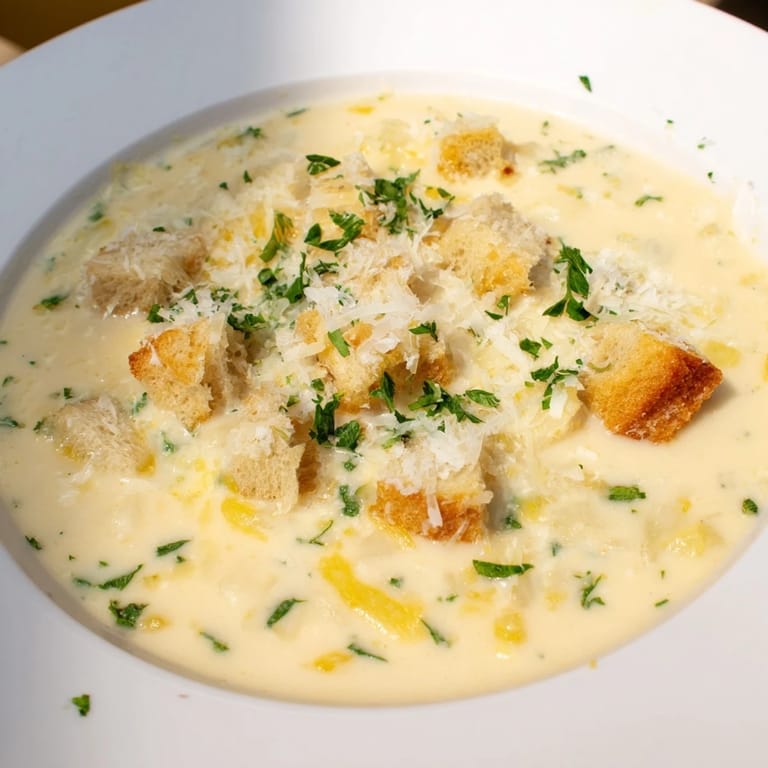
- Ladle into warm bowls and scatter fresh parsley and extra Parmesan on top, or get creative with crispy croutons or a drizzle of garlic-infused oil.
 Pin It
 There's something almost magical about how this soup bridges the gap between indulgence and practicality—it feels special enough for guests, but humble enough that you won't feel guilty making it just for yourself on a Wednesday night. It's become my answer when someone says they're cold, tired, or in need of something that feels like a warm hug in a bowl.
Why Stale Bread Is Actually the Secret
Fresh bread will disintegrate into mush almost immediately, which sounds like it might be what you want until you realize you've lost all texture and end up with something that tastes more like hot milk than soup. Stale or day-old bread has a firm crumb structure that resists the broth long enough to infuse it with flavor while still softening into the liquid. I learned this the hard way by attempting this with a fresh baguette and ending up with something closer to paste. Now I specifically save my older bread, knowing it's destined for something far better than the compost.
The Garlic Question: Fresh Versus Jarred
Jarred minced garlic tastes flattened and one-dimensional compared to what happens when you mince a fresh clove yourself—something about the blade and the release of those oils creates a brightness that preserves the garlic's personality. When you cook six cloves fresh garlic with butter and thyme, you're building layers. With jarred, you're just adding sweetness and a vague garlicky note that gets lost among the cream and cheese.
Variations and Confidence
Once you understand how this soup works, you can play. A pinch of red pepper flakes adds a gentle heat that makes the garlic taste more alive. A rub of fresh garlic on the bread cubes before they go into the pot deepens the flavor even further. Crispy croutons on top add a textural surprise that transforms each spoonful, or a swirl of garlic-infused oil catches the light and tastes indulgent.
- The beauty of this soup is that it's forgiving—even if your broth is a little salty or your bread is extra dry, the cream and cheese will balance everything out.
- Make a vegan version by swapping the cream for a cashew-based sauce or oat cream, and using nutritional yeast or vegan Parmesan for that savory depth.
- A gluten-free version works perfectly well if you start with gluten-free bread—the technique and flavors remain unchanged.
 Pin It
 This soup has quietly become one of my most requested recipes, which still surprises me given its humble origins as a solution to stale bread. There's something deeply satisfying about turning something you were about to throw away into something that brings people to the table.
Recipe FAQs
- → How does toasting the bread affect the soup?
Toasting the bread cubes before adding broth enhances their flavor and helps them absorb the liquid while retaining a slight texture, resulting in a rich and hearty soup base.
- → Can I use different herbs instead of thyme?
Yes, fresh herbs like rosemary or sage can be substituted to provide a distinct aromatic profile while maintaining the soup’s savory depth.
- → What is the best way to achieve a smooth consistency?
Using an immersion blender directly in the pot or transferring the soup in batches to a countertop blender ensures a creamy, even texture.
- → Are there dairy-free alternatives for this dish?
Plant-based creams and vegan Parmesan substitutes can be used to maintain creaminess and flavor while accommodating dairy-free diets.
- → How can I add a spicy element to this soup?
Incorporating red pepper flakes during cooking or drizzling garlic-infused chili oil on top adds a gentle heat without overpowering the flavors.