 Pin It
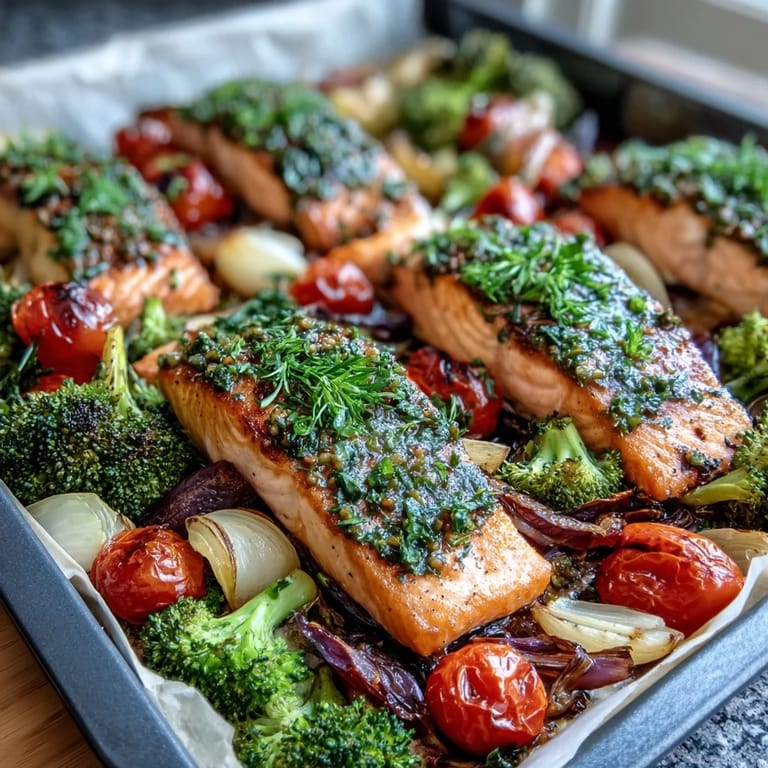
 There's something about the smell of salmon hitting a hot pan that makes you feel like you've got your life together, even if you're cooking in yesterday's clothes. My neighbor Sarah mentioned she'd been stress-eating takeout all week, so I threw this together on a Tuesday evening and watched her eyes light up when the oven door opened. The tangy Dijon glaze caught the light, and suddenly we were both laughing about how something this good takes less time than scrolling through recipes. That's when I realized this dish wasn't just healthy—it was the kind of meal that makes people feel actually cared for.
I made this for my parents last spring when they were visiting, and my dad—who usually pushes vegetables to the edge of his plate—actually asked for seconds on the roasted red peppers. My mom snapped a photo of the whole pan before we even served it, something she'd never done before. That moment told me this recipe had crossed over from just being easy into something that feels special enough to share, which is exactly what I look for.
Ingredients
- Salmon fillets (4, about 6 oz each): The foundation of this dish—choose ones that look firm and smell like the ocean, not fishy, and let them sit at room temperature for five minutes before cooking so they cook evenly.
- Dijon mustard (2 tablespoons): This isn't mild yellow mustard; the Dijon brings a subtle heat and tanginess that balances the richness of the salmon beautifully.
- Olive oil (3 tablespoons total): Use good quality oil if you have it, as it becomes part of the flavor here rather than just a cooking medium.
- Lemon juice (1 tablespoon): Fresh squeezed makes all the difference—bottled tends to taste a bit thin in comparison.
- Honey (1 teaspoon): This small amount creates a slight glaze and softens the mustard's sharpness without making the dish sweet.
- Garlic (1 clove, minced): Raw garlic in the glaze adds depth; don't skip the mincing step because whole pieces won't blend properly.
- Broccoli florets (2 cups): Cut them smaller than you think you need to—they'll caramelize faster and brown at the edges beautifully.
- Cherry tomatoes (2 cups, halved): Halving them exposes the cut side to heat, which creates these little bursts of concentrated sweetness.
- Red bell pepper (1 large, sliced): The natural sugars caramelize in the oven, so thick slices are better than thin ones.
- Red onion (1 medium, wedges): Wedges hold their shape better than rings and roast more evenly.
- Dried Italian herbs (1 teaspoon): Herbes de Provence works too if that's what you have—either way, this is where you can taste the difference between a good version and a great one.
- Salt and pepper: Season in two places—once on the vegetables, once on the glaze—so flavors are balanced throughout rather than just on the surface.
- Lemon wedges and parsley: These aren't optional garnishes; they brighten everything at the last moment and make the dish feel finished.
Tired of Takeout? 🥡
Get 10 meals you can make faster than delivery arrives. Seriously.
One email. No spam. Unsubscribe anytime.
Instructions
- Heat the oven and prep your canvas:
- Get your oven to 425°F (220°C) and line your sheet pan with parchment paper if you have it—this prevents sticking and makes cleanup almost effortless. If you don't have parchment, a light brush of oil works fine, though you'll need to pay attention so nothing catches.
- Build the glaze that makes this special:
- In a small bowl, whisk together the Dijon, olive oil, lemon juice, honey, minced garlic, salt, and pepper until it looks smooth and emulsified. Taste it with a clean spoon—it should be tangy and slightly sharp, not dull.
- Arrange and season the vegetables:
- Spread all your cut vegetables across the sheet pan, leaving space in the middle for the salmon. Drizzle with olive oil, sprinkle with herbs, salt, and pepper, then toss everything together with your hands until each piece is coated—this is where the caramelization begins.
- Nestle in the salmon:
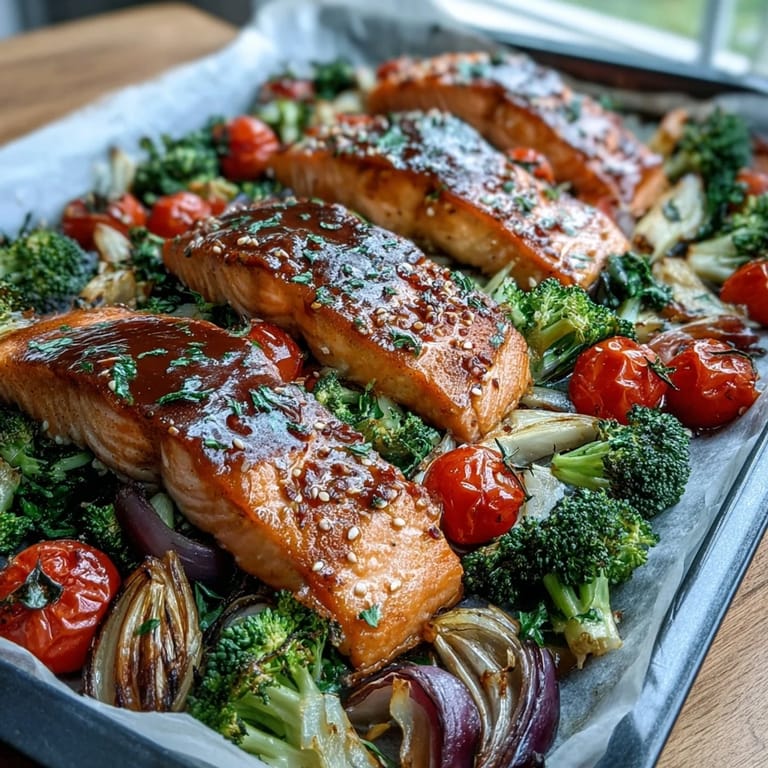
- Place salmon fillets skin-side down (if using skin-on) right among the vegetables where there's room. Brush each fillet generously with the Dijon glaze, making sure you get the edges where flavors concentrate.
- Roast until everything is perfect:
- Slide the whole pan into the oven for 20 to 25 minutes, depending on how thick your fillets are. The salmon will look opaque when it's done and should flake easily with a fork—no translucent center, but not dry either.
- Finish and serve immediately:
- Pull everything out of the oven and scatter fresh parsley over the top if you have it. Serve each portion with a lemon wedge so people can add brightness at the last second.
 Pin It
 Last month, a friend texted me at 5 PM saying he'd just gotten home from a terrible day at work and had no idea what to eat. I sent him this recipe, and he called me an hour later saying it was exactly what he needed—something that didn't require thinking but still felt like real food. There's something quietly powerful about a dish that meets you where you are.
Why This Works as a Weeknight Dinner
The beauty of this recipe is that it doesn't ask you to juggle multiple pans or babysit anything while it cooks. Once everything goes into the oven, you can actually sit down, pour a glass of wine, or just breathe for twenty minutes while the oven does the real work. It's the kind of efficiency that feels less like meal prep and more like you figured out how to take care of yourself on a busy day.
The Secret Behind the Glaze
The Dijon mustard is really the star here—it's not overpowering, but it creates this glossy coating that prevents the salmon from drying out while it roasts. The honey and lemon juice balance the mustard's sharpness so the overall taste feels sophisticated rather than sharp, and the whole thing comes together in less time than it takes to chop the vegetables. I've tried other glazes, but this one is the one I keep coming back to.
Making It Your Own
This recipe is flexible enough to work with what you have on hand, which is something I've learned through a lot of kitchen experiments. If you don't like broccoli, asparagus or green beans roast beautifully alongside salmon, and if you want extra brightness, add lemon zest directly to the salmon before it goes in the oven. The structure works so well that you can swap vegetables season by season and it never feels like you're making something different.
- Try grating fresh lemon zest over the salmon before roasting for a citrus depth that feels almost luxurious.
- If you want more heat, add a pinch of cayenne to the glaze or a dash of hot sauce drizzled after roasting.
- This pairs beautifully with a crisp white wine, but it's equally good with just sparkling water and fresh lemon.
 Pin It
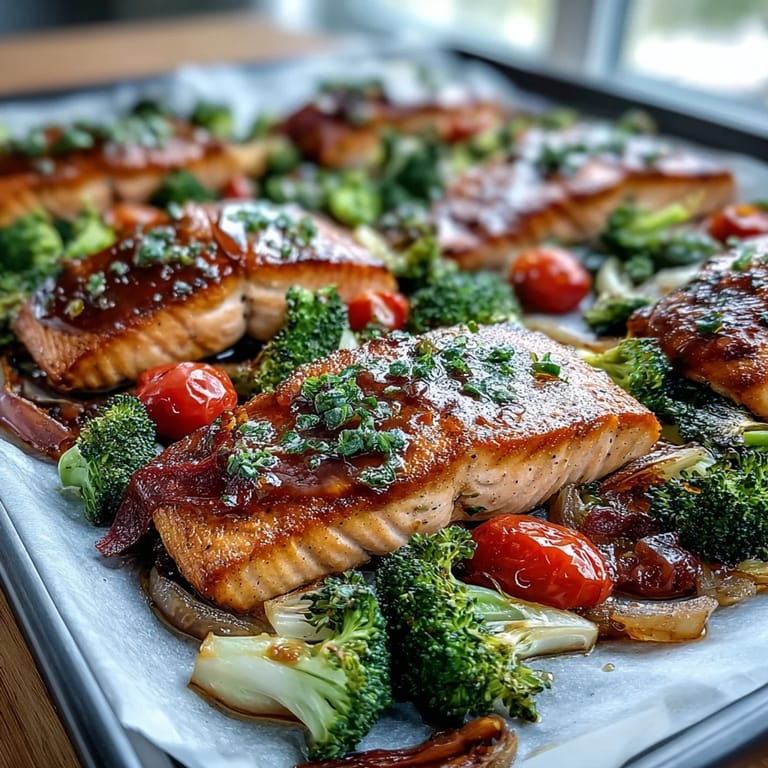
 This dish has become one of those recipes I make when I want to feel like I'm taking good care of myself and the people around me. It's simple enough that it doesn't feel like work, but thoughtful enough that it tastes like something made with real intention.
Recipe FAQs
- → What type of salmon works best?
Both skin-on and skinless salmon fillets perform well, though skin-on helps keep the fish moist during roasting.
- → Can I substitute the vegetables?
Yes, swap broccoli for asparagus or green beans depending on preference and seasonal availability.
- → How do I know when the salmon is cooked?
The salmon is done when it flakes easily with a fork and appears opaque throughout.
- → What herbs complement the dish?
Dried Italian herbs or herbes de Provence provide a fragrant, balanced seasoning that enhances both salmon and vegetables.
- → Any tips for extra flavor?
Sprinkle finely grated lemon zest over the salmon before roasting for a bright, zesty note.