 Pin It
 There's something about the smell of mushrooms hitting hot oil that stops me mid-thought every time. I discovered this soup on a gray October afternoon when my farmer's market bag was overflowing and I wanted something that felt like a warm hug. The barley was actually a last-minute grab—I almost walked past it—but something told me it belonged in this pot, and I've been grateful ever since.
I made this for my neighbor one winter when she mentioned feeling under the weather, and watching her face as she tasted it—that quiet moment of satisfaction—reminded me why I cook. She asked for the recipe three days later and called to tell me she'd made it for her book club. That's when I knew it was something special.
Ingredients
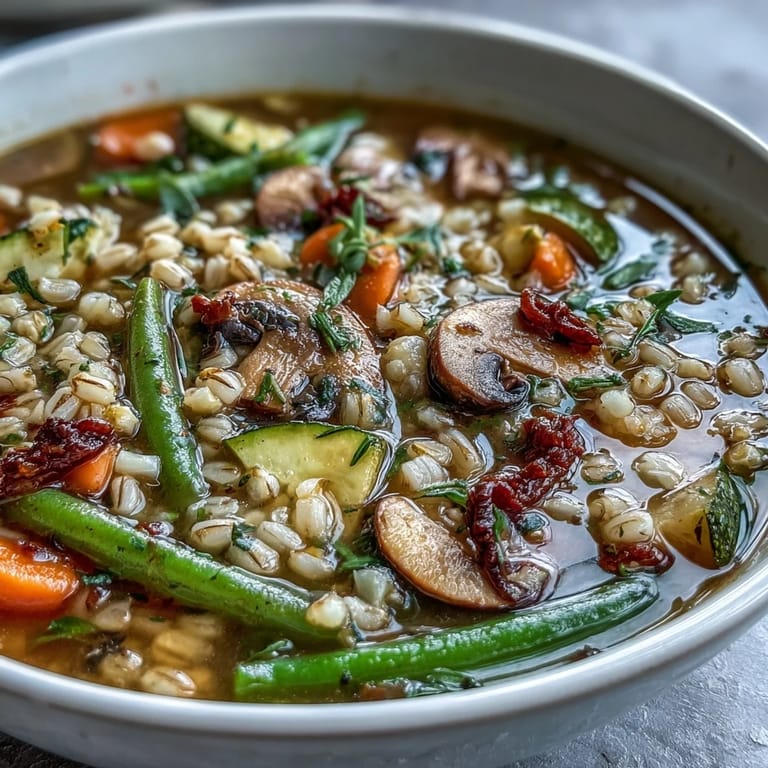
- Pearl barley: This grain is the backbone of everything—it absorbs all the flavor around it and gets tender without turning to mush if you're paying attention.
- Olive oil: Use a decent one, nothing fancy, but something you'd actually taste on bread.
- Yellow onion, carrots, and celery: This is your flavor foundation, the holy trinity that makes soup taste like soup.
- Garlic: Mince it fine so it disappears into the broth and builds that deep, savory base.
- Cremini or white mushrooms: They release moisture as they cook, which becomes part of your soup's soul—don't skip this step by using canned.
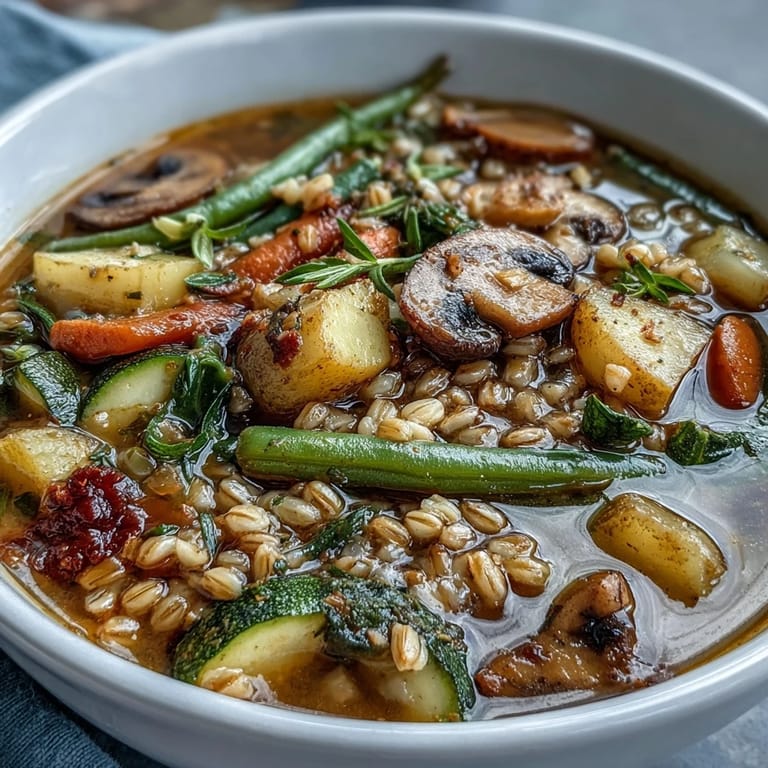
- Potato: It breaks down slightly and thickens the broth naturally, which is far better than adding cream.
- Zucchini: Adds lightness and texture—it stays a bit firmer than the potato, which you'll appreciate.
- Diced tomatoes: The acid balances all that earthiness and gives you brightness without needing lemon.
- Green beans: They stay bright and hold their shape if you add them when you add everything else.
- Vegetable broth: Taste it before you buy—some broths are aggressively salty and will ruin your seasoning math.
- Thyme and oregano: These dried herbs are what tie everything together; fresh would actually compete instead of support.
- Bay leaf: It whispers in the background and makes people ask what the secret ingredient is.
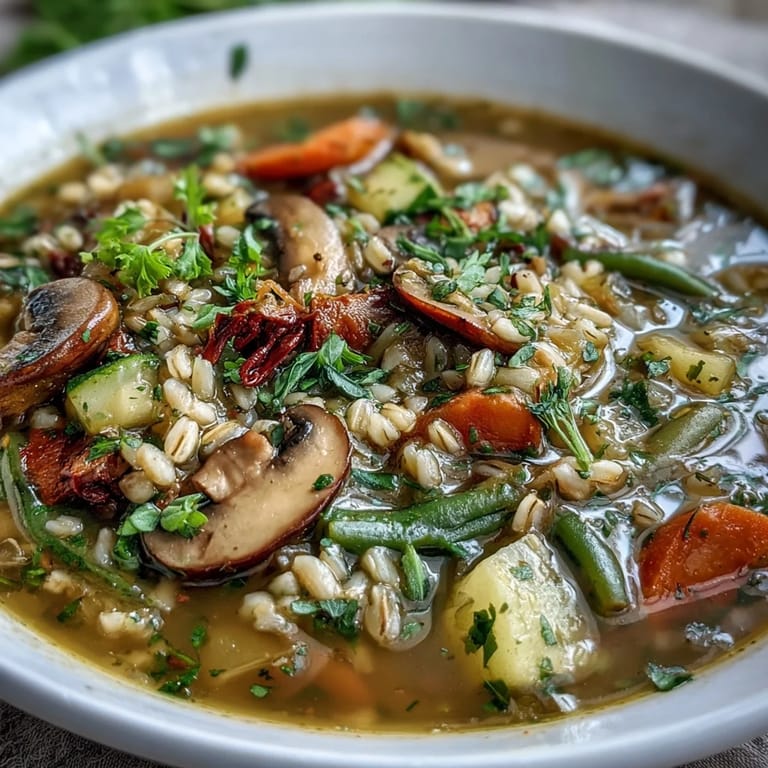
- Fresh parsley: This is your finale, the brightness that brings everything into focus at the last second.
Tired of Takeout? 🥡
Get 10 meals you can make faster than delivery arrives. Seriously.
One email. No spam. Unsubscribe anytime.
Instructions
- Build your flavor foundation:
- Heat the oil in your largest pot over medium heat, then add the onion, carrots, and celery. You want them to soften and start releasing their sweetness—about 5 minutes—before you move forward. The sound of them sizzling is how you know you're in the right place.
- Wake up the mushrooms:
- Stir in the garlic and mushrooms, letting them cook for another 5 minutes until they collapse slightly and darken. This is where that earthy, almost nutty flavor gets born.
- Layer in everything else:
- Add the potato, zucchini, green beans, and tomatoes (don't drain them—that juice is gold), stirring everything to get it all coated in the oil and aromatics. The pot should look almost full at this point, slightly chaotic, like you're about to make a mistake—you're not.
- Bring it all together:
- Pour in the broth, add the barley, thyme, oregano, bay leaf, salt, and pepper, then stir thoroughly. Bring the whole thing to a boil—you'll see the surface roiling and the edges bubbling—then immediately turn the heat down to low, cover it, and let it simmer gently for 40 to 45 minutes.
- The long, quiet wait:
- Stir occasionally so nothing sticks to the bottom, but mostly just be present with it. The barley will swell and soften, the vegetables will tender, and the broth will deepen in color. This is where patience becomes flavor.
- Finish and adjust:
- Fish out the bay leaf, then taste a spoonful. Adjust salt and pepper if you need to—this is your moment to make it exactly right. Some days you might need another pinch of thyme; some days the broth is already perfect.
- Serve with purpose:
- Ladle into bowls and top each one with fresh parsley so it's still bright and fragrant when it meets your spoon. The green against the golden broth is not just beautiful—it's the difference between good and unforgettable.
 Pin It
 There was a Tuesday when my kid came home from school quiet and overthinking something, and I put a bowl of this in front of them without asking questions. Halfway through, they started talking again—really talking—and I realized sometimes the best gift you can give is something warm that doesn't demand anything in return. That's what this soup does.
Why Barley Matters Here
Barley isn't flashy, but it's honest work. It soaks up every bit of flavor around it while staying substantial enough that you actually feel satisfied. I used to think of barley as old-fashioned, something my grandmother made, but then I tasted it done right and understood why she kept making it. It's the difference between a soup that feels like lunch and one that feels like care.
The Vegetable Equation
This recipe isn't rigid about vegetables, and that's actually its greatest strength. The carrots and celery are non-negotiable because they're your base, but everything else is negotiable. I've made it with parsnips instead of potatoes, added spinach at the last minute, swapped zucchini for yellow squash when that's what I had. The only rule is that your vegetables should be cut roughly the same size so everything cooks at the same pace and no one piece dominates the bowl.
Seasons Change, Soup Stays True
This is a year-round soup, though it feels different in each season. In winter it's pure comfort, in spring it tastes fresh if you use tender green vegetables, in summer it's still good served just slightly warm, and in fall it's basically mandatory. I've learned that adding a handful of white beans in step 4 makes it heartier if you're feeding hungry people, and sometimes I stir in fresh dill right before serving because why not. The beauty is that it's flexible enough to meet you wherever you are.
- Try adding a drained can of white beans or chickpeas for extra protein and substance.
- A splash of balsamic vinegar at the very end adds depth that people can't quite identify.
- Make a double batch because it freezes beautifully and your future self will be grateful.
 Pin It
 This soup taught me that the best meals don't need to be complicated to be memorable. Make it, serve it, watch what happens.
Recipe FAQs
- → How do I ensure the barley is tender?
Simmer the barley with vegetables in broth for 40–45 minutes until it softens fully and absorbs the flavors.
- → Can I use different mushrooms?
Yes, cremini or white mushrooms work well, but you can also use button or portobello for varied textures.
- → What herbs enhance the soup's flavor?
Thyme, oregano, and bay leaf add earthy, aromatic notes that complement the vegetables and barley.
- → Is there a way to add more protein?
Incorporate drained white beans during cooking to boost plant-based protein without altering the flavor balance.
- → How can this soup be made gluten-free?
Replace barley with brown rice or quinoa and adjust cooking time accordingly for a gluten-free option.
- → What type of oil is best for sautéing the vegetables?
Olive oil is recommended for its flavor and healthy fats, enhancing the aromatics gently.