 Pin It
 One November evening, I was standing in my kitchen with a craving I couldn't quite name—something warm, something that tasted like comfort without being fussy. I had ground beef thawing, a box of fresh tortellini in the fridge, and tomatoes calling out from the pantry. Within forty-five minutes, I had a pot of this creamy, deeply savory soup simmering away, filling my entire apartment with the smell of basil and beef broth. My neighbor poked their head in wondering what smelled so good, and I realized I'd stumbled onto something special—a soup that feels homemade without the fuss.
I made this for my sister on a cold Tuesday when she'd had a rough week, and watching her face light up as she tasted it reminded me that food is really just love with flavor. She asked for the recipe before she'd even finished the bowl, and now it's her go-to when she needs to feed her own family something that feels special but stays simple.
Ingredients
- Ground beef: Lean works beautifully here—it browns quickly and keeps the broth from getting greasy, which is the whole point.
- Yellow onion and garlic: These are your aromatics, the quiet foundation that makes everything else taste richer and more alive.
- Diced tomatoes: Canned is perfect; don't feel bad about it—that juice is liquid gold for your broth.
- Beef broth: Use low-sodium so you can taste every layer; you'll adjust salt at the end anyway.
- Heavy cream: This is what transforms it from soup to something silky and special—it softens all the sharp edges.
- Tomato paste: Just two tablespoons, but it deepens the whole thing, making it taste less simple and more intentional.
- Fresh or refrigerated cheese tortellini: The pasta is your star player here; fresh ones cook faster and have a tender, almost pillowy texture that frozen just doesn't match.
- Dried basil and oregano: Don't skip these—they're dried, yes, but they bloom in the warmth and become the soul of the broth.
- Salt, pepper, and red pepper flakes: Build your seasoning as you go; taste constantly because you're in control here.
- Parmesan and fresh basil: The garnish that makes someone think you tried harder than you actually did.
Tired of Takeout? 🥡
Get 10 meals you can make faster than delivery arrives. Seriously.
One email. No spam. Unsubscribe anytime.
Instructions
- Brown the beef:
- Heat a large pot over medium and add your ground beef, breaking it up with a spoon as it cooks. You're listening for that gentle sizzle, watching for the color to shift from pink to deep brown—this takes about 5 minutes and is where all the flavor starts. If there's a pool of fat at the end, drain it, but save a little; it carries flavor.
- Build the aromatics:
- Toss in your diced onion and let it soften for a few minutes until it starts to turn translucent and smell sweet. Add the garlic and stir constantly for just a minute—you want it fragrant, not burnt.
- Add the tomato base:
- Stir in your tomato paste and let it cook for a minute, then add the canned tomatoes with all their juice, plus your dried herbs, salt, pepper, and red pepper flakes if you like heat. Stir this together and let it simmer for a couple of minutes so everything gets to know each other.
- Build the broth:
- Pour in your beef broth and bring it to a gentle boil, then lower the heat and let it simmer for about 10 minutes. This is where the flavors start to marry and deepen, and your kitchen smells incredible.
- Add the cream:
- Stir in your heavy cream slowly, watching as the broth transforms into something luxurious and creamy. Bring it back to a gentle simmer—you're not boiling anymore, just keeping it warm and cozy.
- Cook the tortellini:
- Add your tortellini and cook according to the package, usually 4 to 6 minutes, until they float to the top and are tender. They cook faster than you'd think, so don't wander off.
- Optional spinach:
- If you're adding spinach, stir it in now and let it wilt for about a minute—it'll turn a deeper green and disappear into the broth, adding nutrition without anyone noticing.
- Taste and adjust:
- This is the moment you take a spoon, blow on it, and taste. More salt? More pepper? You're in charge here, so season until it tastes like home.
 Pin It
 There's something about stirring a pot of soup that slows you down, makes you pay attention. I've made this on nights when I needed to think, and somehow the repetitive motion of the spoon and the warmth rising up made everything feel more manageable. It's the kind of food that does more than fill your stomach—it settles your mind.
Why This Soup Works Every Time
This recipe succeeds because it respects the simple math of good cooking: good ingredients, proper browning, patience with heat, and balance. There's no complicated technique hiding in here—just clear steps that build on each other. The beef gets deep and savory, the broth becomes a stage for the cream to shine, and the tortellini add that soft, delicate texture that makes people keep reaching for another spoonful. It's the kind of soup that looks like you spent all day on it but asks for less than an hour of your time.
Variations That Still Taste Right
Once you've made this a few times, you'll start seeing ways to twist it that feel natural. Some people add a handful of diced carrots or zucchini for more vegetables and a slightly lighter feel. Others swap the heavy cream for half-and-half if they want something less rich, or add a splash of white wine to the broth for brightness. The spinach is optional, but it adds color and nutrients without changing the fundamental character of the dish. The beauty is that this recipe is flexible enough to work with what you have on hand, but structured enough that it's hard to mess up.
Serving and Pairing Thoughts
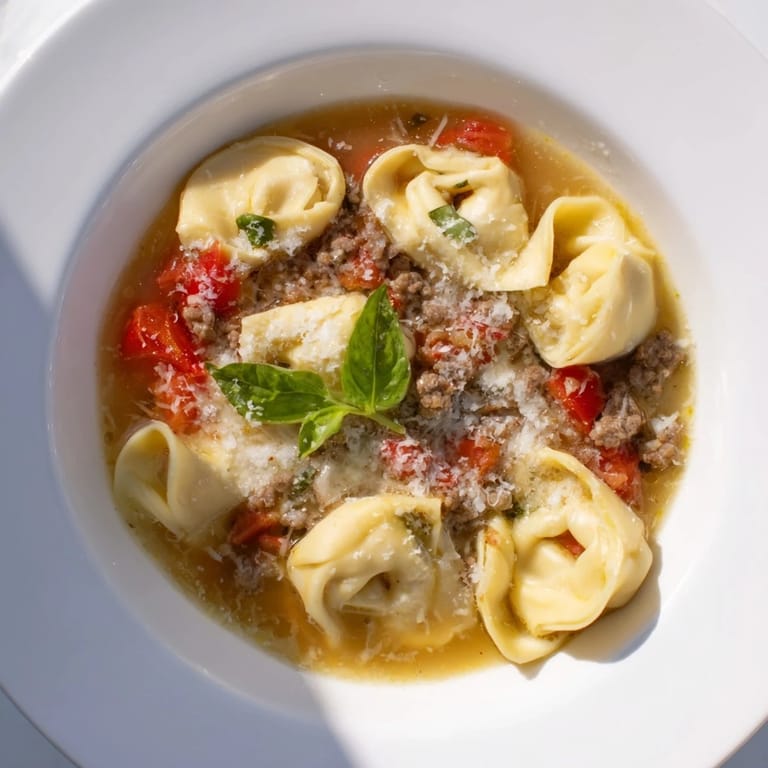
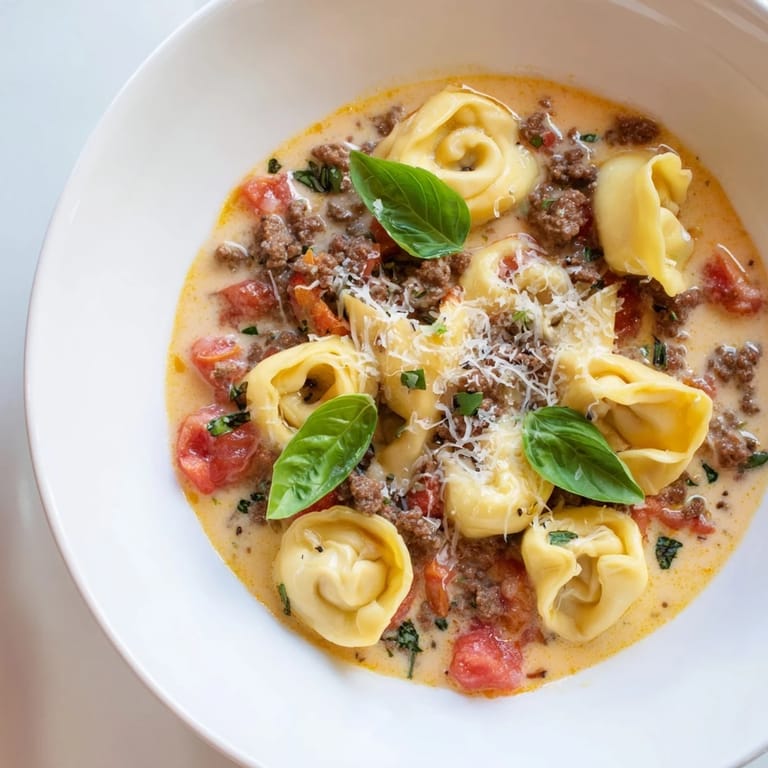
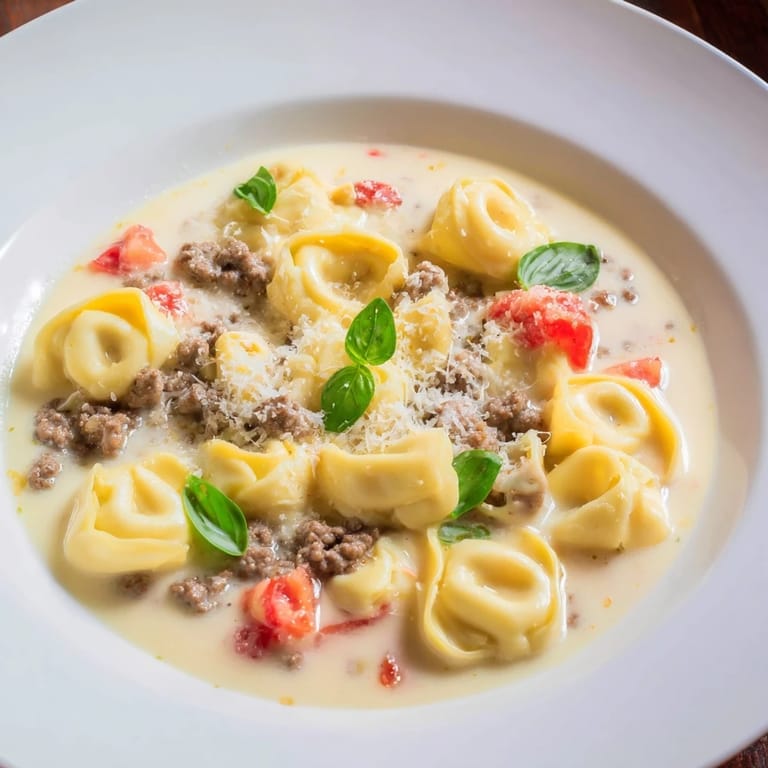
Serve this hot in a bowl deep enough to hold the broth, topped with a generous handful of grated Parmesan and a few torn leaves of fresh basil. A crusty piece of Italian bread is essential—something to tear off and drag through that creamy, savory broth. A glass of Chianti alongside completes the picture, but honestly, a simple glass of water works just as well. This soup is the kind of meal that doesn't need much else to feel complete; it's already doing everything it needs to do.
- Make sure your tortellini are fresh or properly thawed if frozen, so they cook evenly and don't turn into small dough balls.
- Taste the broth before adding the pasta and make your final seasoning adjustments then—it's harder to fix once everything is in.
- Save any leftovers for the next day, but store the soup and tortellini separately so the pasta doesn't oversoak and turn soft.
 Pin It
 This is the kind of recipe that becomes your own after a few tries, and that's exactly what I hope happens. Keep a spoon in that pot, taste as you go, and remember that the best meals are the ones made with attention and a little bit of heart.