 Pin It
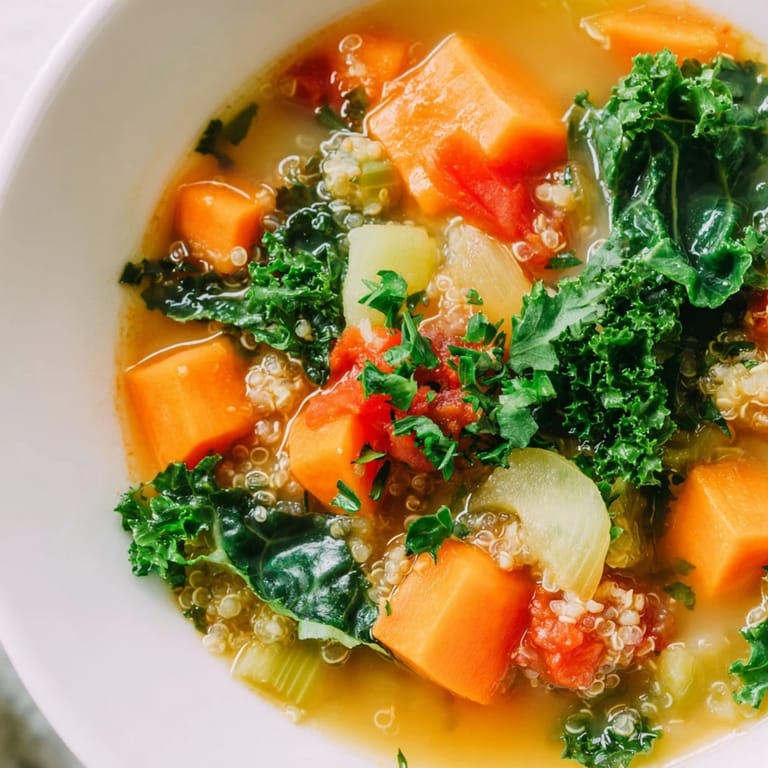
 The first time I made this soup was during a particularly brutal February when my apartment heat was fighting a losing battle against drafty windows I kept meaning to seal. I had a CSA box full of winter vegetables that needed using and a bag of quinoa I had bought on a health kick months prior. Something about watching root vegetables collapse into broth while snow piled up outside made everything feel manageable again.
Last winter my neighbor came over unexpectedly with takeout containers before I could even mention I had made soup. We ended up eating mine instead and she asked for the recipe before she even finished her first bowl. Now whenever the temperature drops she texts asking if the orange pot is on the stove.
Ingredients
- 1 tablespoon olive oil: This creates the foundation for building flavor as the vegetables soften and sweeten
- 1 medium onion, diced: Choose yellow onions for the best balance of sweetness and depth
- 2 garlic cloves, minced: Fresh garlic makes all the difference so avoid pre-minced jars here
- 2 carrots, peeled and sliced: Look for carrots that feel heavy and firm without any rubbery texture
- 2 celery stalks, sliced: Even if the celery has seen better days it will shine in soup
- 1 medium parsnip, peeled and diced: This adds a lovely subtle sweetness that balances the earthier vegetables
- 1 small sweet potato, peeled and diced: The sweet potato becomes creamy and adds body to the broth
- 1 cup chopped kale or Swiss chard: Remove those tough stems or they will never soften no matter how long you simmer
- 1 cup chopped cabbage: Green cabbage works beautifully but red cabbage will turn your soup an alarming purple
- 1 cup diced tomatoes: Canned tomatoes are perfectly fine here and actually add more depth than fresh out of season
- 1/2 cup quinoa, rinsed: Rinse until the water runs clear or your soup will taste bitterly soapy
- 6 cups low-sodium vegetable broth: Starting with low-sodium broth lets you control the seasoning perfectly
- 1 teaspoon dried thyme: Thyme pairs perfectly with root vegetables and feels cozy without overwhelming
- 1 teaspoon dried oregano: This adds an herbal brightness that keeps the soup from feeling too heavy
- 1 bay leaf: Remove it before serving unless you want someone to have an unpleasant crunchy surprise
- Salt and freshly ground black pepper: Taste at the end since broth brands vary dramatically in sodium
- 2 tablespoons chopped fresh parsley: This adds a fresh pop of color and flavor that wakes up the whole bowl
- Juice of 1/2 lemon: The lemon juice is optional but it makes all the flavors sing together
Tired of Takeout? 🥡
Get 10 meals you can make faster than delivery arrives. Seriously.
One email. No spam. Unsubscribe anytime.
Instructions
- Build the Flavor Base:
- Heat the olive oil in a large soup pot over medium heat. Add the onion and garlic then sauté for 2 to 3 minutes until fragrant and translucent.
- Soften the Root Vegetables:
- Add the carrots, celery, parsnip, and sweet potato. Cook for 5 to 6 minutes until they begin to soften and smell sweet.
- Add the Greens:
- Stir in the chopped kale, cabbage, and diced tomatoes. Cook for another 2 minutes until the greens begin to wilt.
- Add the Broth and Quinoa:
- Add the rinsed quinoa, vegetable broth, thyme, oregano, bay leaf, salt, and pepper. Bring everything to a gentle boil.
- Simmer to Perfection:
- Reduce heat to low, cover, and simmer for 25 to 30 minutes until the vegetables are tender and the quinoa has unfurled into little spirals.
- Finish with Brightness:
- Remove and discard the bay leaf. Stir in the fresh parsley and lemon juice if using. Taste and adjust the seasoning as needed.
- Serve Warm:
- Ladle into bowls and serve hot while the steam still rises in comforting clouds.
 Pin It
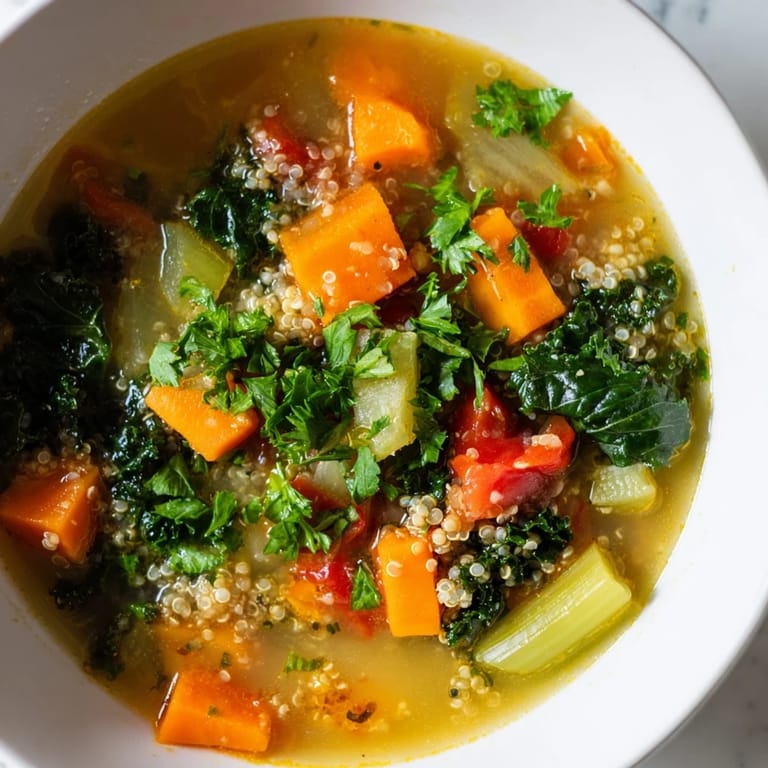
 This recipe became my go-to sick day food after a terrible flu knocked me out for a week. My friend dropped off groceries and I somehow managed to make this even through the fog. Something about those vegetables simmering away made me feel cared for even when I was completely alone.
Make It Your Own
The beauty of this soup lies in its flexibility. I have made it with whatever vegetables linger in the crisper drawer and it always works. Sometimes I add diced butternut squash instead of sweet potato or throw in some zucchini during the last ten minutes of cooking.
Meal Prep Magic
This soup actually tastes better on day two or three once the flavors have had time to deepen and marry together. I often make a double batch on Sunday and portion it into glass containers for effortless lunches all week long. The quinoa does absorb more liquid overnight so you may need to add a splash of water or broth when reheating.
Serving Suggestions
A slice of crusty whole-grain bread toasted until golden and rubbed with raw garlic transforms this from a simple soup into a complete meal. I also love crumbling a bit of goat cheese or feta on top for extra protein and creaminess. When I need something more substantial I serve it alongside a simple green salad with an assertive vinaigrette.
- Keep some red pepper flakes on the table for heat lovers to add themselves
- A drizzle of good olive oil right before serving adds luxurious richness
- Leftovers freeze beautifully for up to three months if you have freezer space
 Pin It
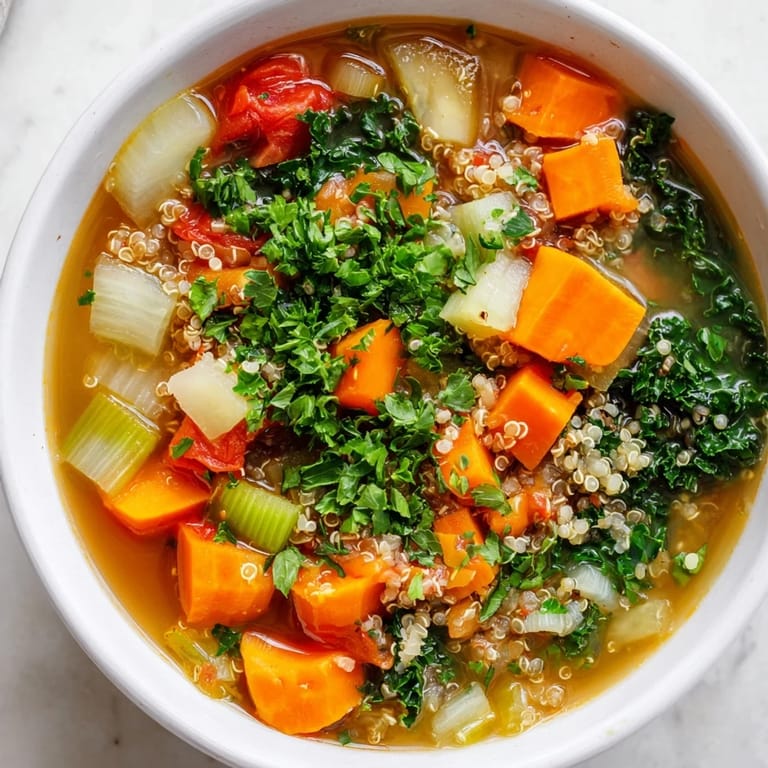
 There is something profoundly comforting about a soup that uses whatever the season offers and turns it into something sustaining. This recipe has carried me through many cold nights and even colder hearts.
Recipe FAQs
- → What vegetables are used in this winter soup?
The soup includes carrots, celery, parsnip, sweet potato, kale or Swiss chard, cabbage, and diced tomatoes.
- → Can quinoa be substituted with another grain?
Yes, you can replace quinoa with grains like barley or brown rice, though cooking times may vary.
- → How can I add more protein to this dish?
Adding drained chickpeas or white beans enhances the protein content without altering the flavor significantly.
- → Is this soup suitable for dietary restrictions?
It is naturally gluten-free, dairy-free, vegetarian, and nut-free, making it friendly for multiple diets.
- → What herbs are used to flavor the broth?
The broth is seasoned with dried thyme, oregano, and fresh parsley, creating a fragrant and savory base.